
Last updated November 25, 2026
 Sweep & inspection
 Caps & crowns
 Flue relining
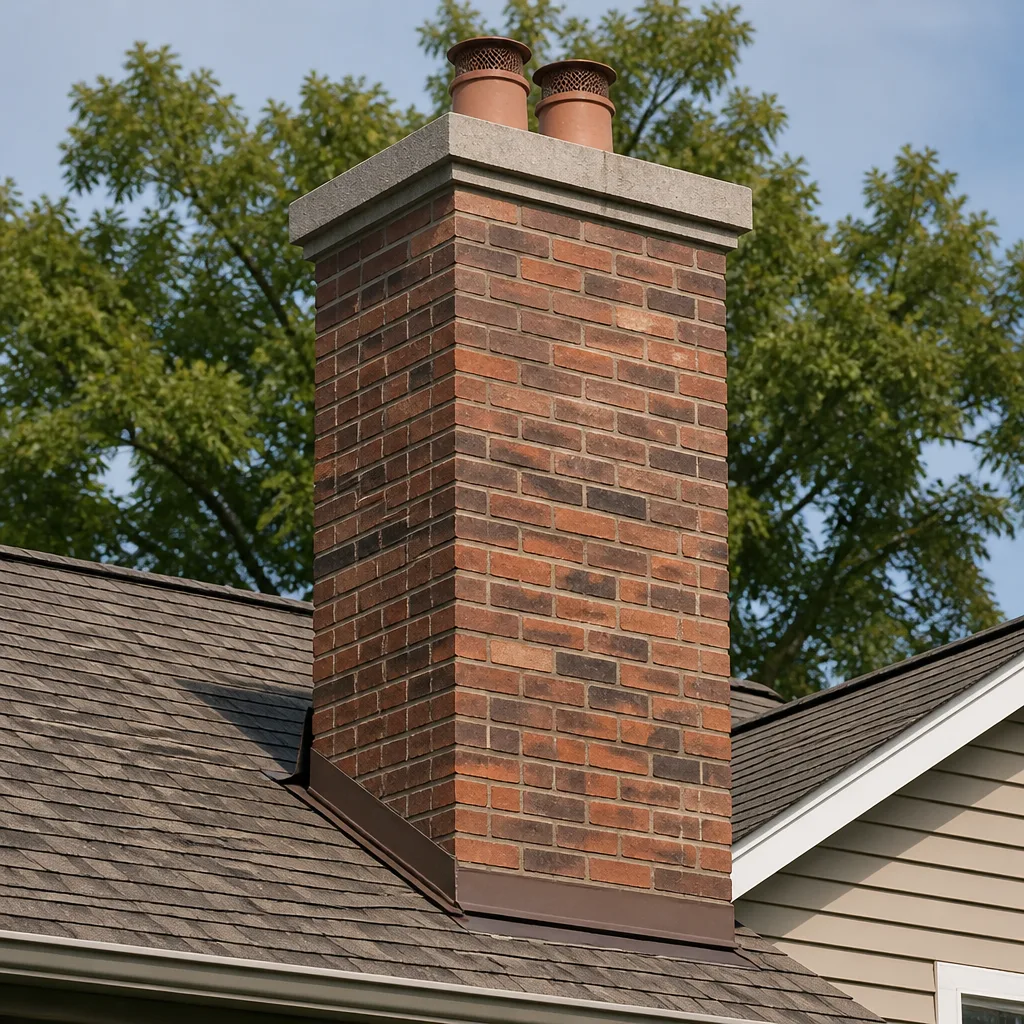 Masonry repair
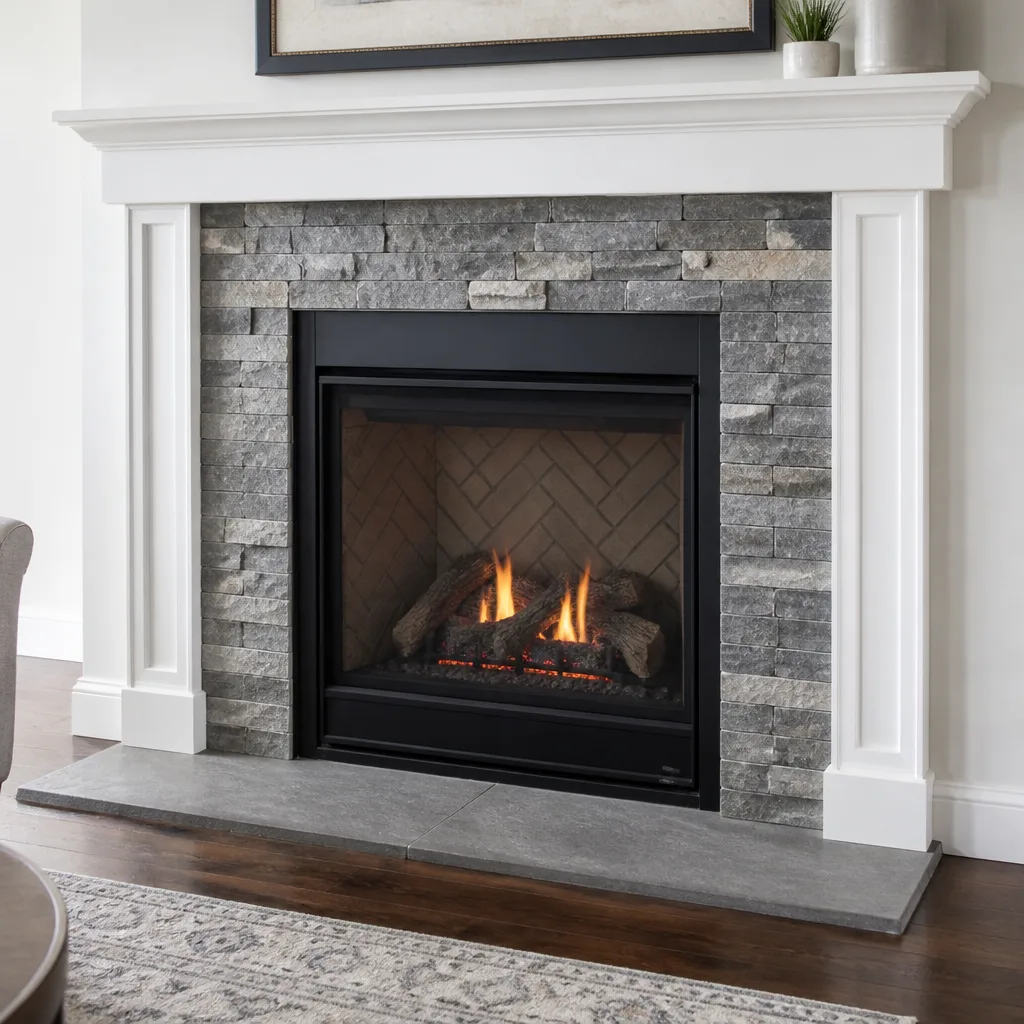 Gas fireplace service
Level 1 sweep and inspection to the NFPA 211 annual standard - flue, crown, cap, and flashing checked and photographed
Chimney sweep logs do not sweep chimneys. They loosen some creosote - which then falls where a brush and vacuum still have to collect it.
DIY vs Professional Chimney Cleaning: The West Valley City Homeowner’s Decision Guide
Here’s the part most chimney guides skip: a homeowner with a brush, a set of rods, and some drop cloths can do a real cleaning job on a chimney that only has light, flaky creosote inside it. That’s not a sales pitch in reverse. It’s just true. The trouble is that standing at the bottom of a flue, or even up on the roof with a flashlight, you have no reliable way to know whether what’s inside is light and flaky or glazed and dangerous. The camera, the lighting, and the trained eye that tell the difference aren’t in the brush kit. So the honest question isn’t “should I DIY?” It’s “which risks does DIY cover, and which ones am I accepting?” This guide walks through exactly that, for West Valley City homeowners burning wood, gas, or anything solid.
Quick Answer
A DIY brush sweep can remove light stage-1 creosote from an accessible flue, but it cannot verify liner integrity, detect hidden chimney fire damage, or assess your crown and flashing. DIY is a reasonable choice only when you have a gas appliance or very light wood use, no visible damage, and a professional inspection within the last two years. For stage-2 or stage-3 creosote, older clay-tile liners, or any possible past chimney fire, you need a professional sweep and inspection before anything else happens.
Styles & brands we work with
- Sweep & inspection
- Caps & crowns
- Flue relining
- Masonry repair
- Gas fireplace service
Table of Contents
- What a DIY Brush Sweep Can and Cannot Do
- When DIY Is Actually a Reasonable Choice
- When DIY Crosses From Risky to Dangerous
- The Break-Even Math: DIY Setup vs. Professional Service
- Understanding the Four Problems Your Chimney Actually Has
- What a Real Inspection Looks Like (and Why “Clean” Isn’t the Same as “Checked”)
- The Insurance and Documentation Angle Nobody Explains
- West Valley City Climate, Housing, and Why Local Context Matters
What a DIY Brush Sweep Can and Cannot Do
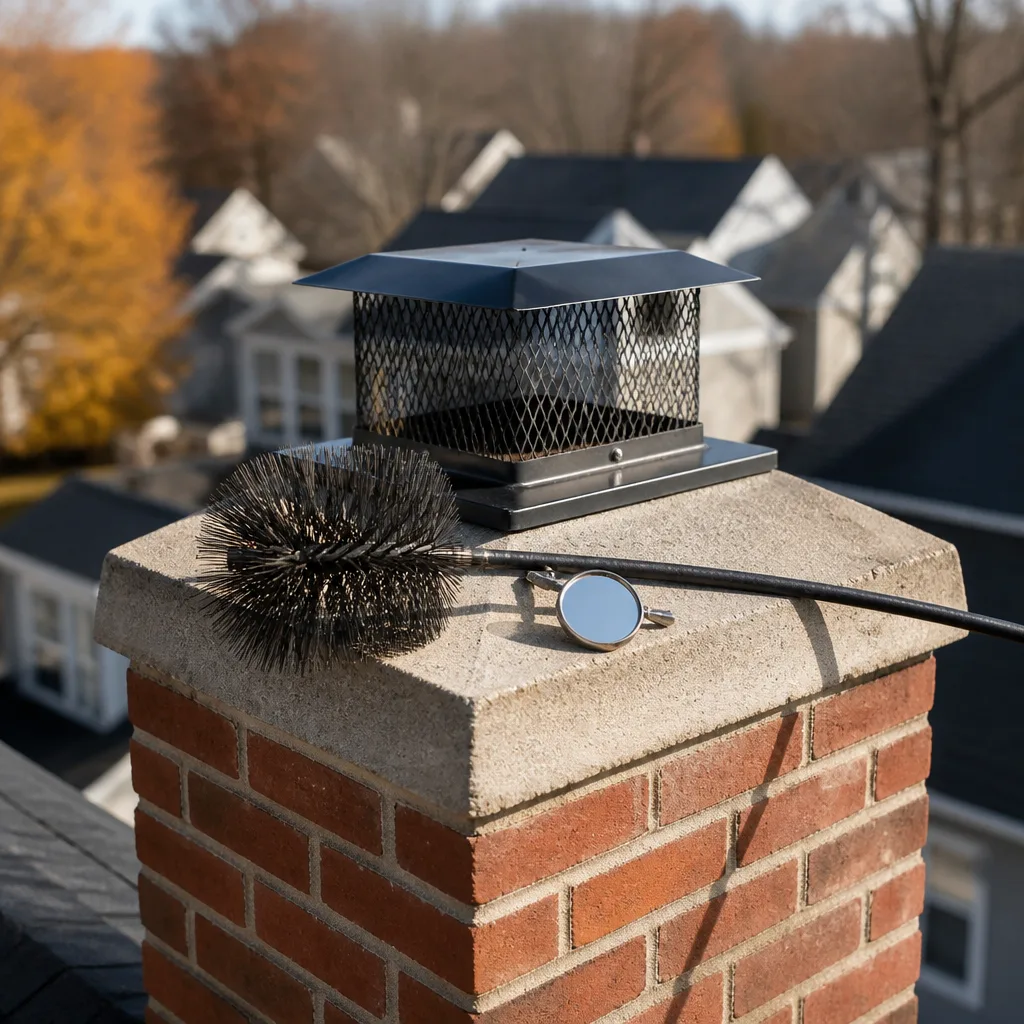
A do-it-yourself brush sweep does one thing well: it knocks loose, flaky creosote off the walls of an accessible flue. That’s genuinely useful when the buildup is light. Brushing with the right diameter brush, working from the top down or bottom up depending on your setup, followed by a shop vacuum with a HEPA filter, can clear a lightly soiled flue in a couple of hours. If that’s all your chimney needs, buying a kit isn’t crazy.
The list of things a brush cannot do is longer, and that list is the whole point of this guide.
- Assess liner integrity. A brush slides right past a cracked flue tile. You won’t feel the crack, and you almost certainly won’t see it from the firebox. Cracks let heat and carbon monoxide reach framing, which is the actual failure mode that destroys houses.
- Detect hidden chimney fire damage. Chimney fires can burn hot and short and then go out without the homeowner ever knowing. The evidence lives in the flue, at the joints, and around the smoke chamber, and you need a camera and training to find it.
- Evaluate the crown and flashing. A cracked crown or lifted flashing lets water into the masonry every time it rains or snows. By the time a homeowner notices the stain on the ceiling, the damage is often structural. Your brush has no opinion on this.
- Reach offsets and smoke chambers properly. Many homes have a flue that bends around framing. A rigid brush on straight rods won’t follow the offset, and the smoke chamber above the damper is a place brushes routinely miss.
- Document anything. If your insurer asks for proof that the chimney was inspected, “I swept it myself” doesn’t close that file. A written report does.
We’ve seen every version of this: a homeowner who did a solid job on the accessible part of the flue and a liner that still had a problem they couldn’t have seen. A sweep is a starting point. A full inspection tells you what the sweep can’t.
When DIY Is Actually a Reasonable Choice
There are real situations where brushing your own chimney is fine. The key is that all the conditions below have to be true at the same time, not most of them.
- You have a gas fireplace or insert with a verified stainless steel liner. Gas appliances produce far less creosote than wood, and a stainless liner is smooth and easier to brush. Verified is the operative word here. If you don’t know what’s behind the firebox, you don’t know.
- Your wood use is light. A fire a few times a month during the cold season, with well-seasoned wood, builds creosote slowly. Daily fires with unseasoned wood build it fast.
- You’ve seen no signs of trouble. No smoky smell in the house after a fire, no visible cracks in the firebox, no staining on the ceiling near the chimney, and no history of a sudden “hot burn” you couldn’t explain.
- You’ve had a professional inspection within the last two years. This is the one most DIYers skip. It’s also the most important. An inspection gives you the baseline that makes DIY safe. Without it, you’re brushing a chimney you’ve never actually looked inside.
- You know the creosote is stage 1. Light, flaky, soot-colored. If it’s shiny, puffy, or tarry, you’re past what a brush should touch and into professional territory.
When all five of those true, brushing your own flue between professional inspections is defensible. When even one of them isn’t, the DIY math changes fast.
When DIY Crosses From Risky to Dangerous
Some situations aren’t “risky DIY.” They’re situations where brushing by hand can do more harm than good, and where the real risks go unaddressed no matter how thorough the sweep was.
- Stage-2 or stage-3 creosote. Stage 2 is puffy and shiny. Stage 3 is glazed and hard as glass, and a brush will skate right over it. Worse, a stiff brush on glazed creosote can pull hardened deposits loose in chunks that lodge in the smoke chamber or damper area, which is exactly where a fire wants fuel.
- Any history of an unexplained “hot burn.” If the fire roared louder than usual, the pipe glowed, or there was a sound like a freight train, you may already have had a chimney fire. Nothing about a brush job addresses fire damage to the flue structure. A camera inspection is the next step.
- An older home with a clay tile liner. Clay tiles crack. That’s just what they do over a few decades of heating and cooling cycles. Cracks let heat into framing and carbon monoxide into the house. You can’t see cracks from below, and a brush can widen them.
- An offset flue or a complex smoke chamber. A rigid brush won’t turn the corner. If you can’t reach it, you can’t clean it.
This is the part where safety has to outweigh cost. The damage from a chimney fire or a carbon monoxide leak happens before a homeowner has a chance to react. That’s not meant to scare anyone off a routine sweep. It’s a plain statement of what’s at stake when the flue needs more than a brush. If any of the situations above describes your chimney, stop and call a professional before the next fire.
The Break-Even Math: DIY Setup vs. Professional Service
Most DIY guides skip the math because the math doesn’t support the DIY side as cleanly as the marketing does. Here’s the honest version. Prices below are typical ranges, not quotes, and your written estimate is what sets the final price.
| Item | Typical Cost | Notes |
|---|---|---|
| Brush and rods | $60 – $150 | Must match flue shape (round, square, rectangular) and interior size. A wrong brush either misses the walls or gets stuck. |
| HEPA vacuum with chimney filter | $150 – $300 | A shop vac without a proper filter blows soot into the room. That’s not a dusting; that’s a cleanup. |
| Drop cloths, respirator, goggles, gloves | $50 – $100 | Respirators rated for soot and creosote, not dust masks. |
| Optional inspection camera | $200 – $500 | Cheap ones rarely give the picture quality and lighting you need to see a cracked tile. |
| Total DIY startup | $260 – $1,050 | The high end is only justified if you’ll sweep every year yourself for many years. |
| Professional sweep, single flue | $150 – $300 | Typical range for a straightforward flue in the West Valley City area. Actual price depends on your system. |
| Professional inspection (Level 1 or Level 2, per NFPA 211) | $100 – $450 | Level 2 includes a camera and is the standard for real estate transactions and post-chimney-fire checks. |
| Sweep and inspection combined | $225 – $600 | Most homeowners bundle these. The inspection is the part that catches problems. |
Do the math on a ten-year horizon. A $400 DIY kit, used every year for ten years, is $40 a year, plus the inspection you still need every year or two. That’s more expensive than two professional sweeps a decade, and it comes with zero documentation and no camera work.
If the kit is a $260 starter setup and you commit to learning your own system carefully, the number changes. What doesn’t change is that the brush isn’t the part that keeps your family safe. The inspection is. Call (844) 625-7149 for an exact quote on a sweep and inspection, and ask what the combined range looks like for your setup.
Understanding the Four Problems Your Chimney Actually Has
DIY brushing is a solution to one problem. A dirty chimney isn’t one problem; it’s four, and only one of them is the one a brush fixes.
- Creosote buildup. The one everybody thinks of. Brushable at stage 1, less so at stage 2, and requiring chemical or mechanical treatment at stage 3. HeatShield resurfacing can restore a flue with damaged or heavily glazed tile without full relining, which is a middle option most homeowners never hear about.
- Obstruction. Animal nests, leaves, fallen tile, or a partially collapsed liner are common issues in a region where critters look for warm places in winter. Brushing alone doesn’t fix obstruction. Removing the material and finding out why it got in (usually a missing or damaged cap) does.
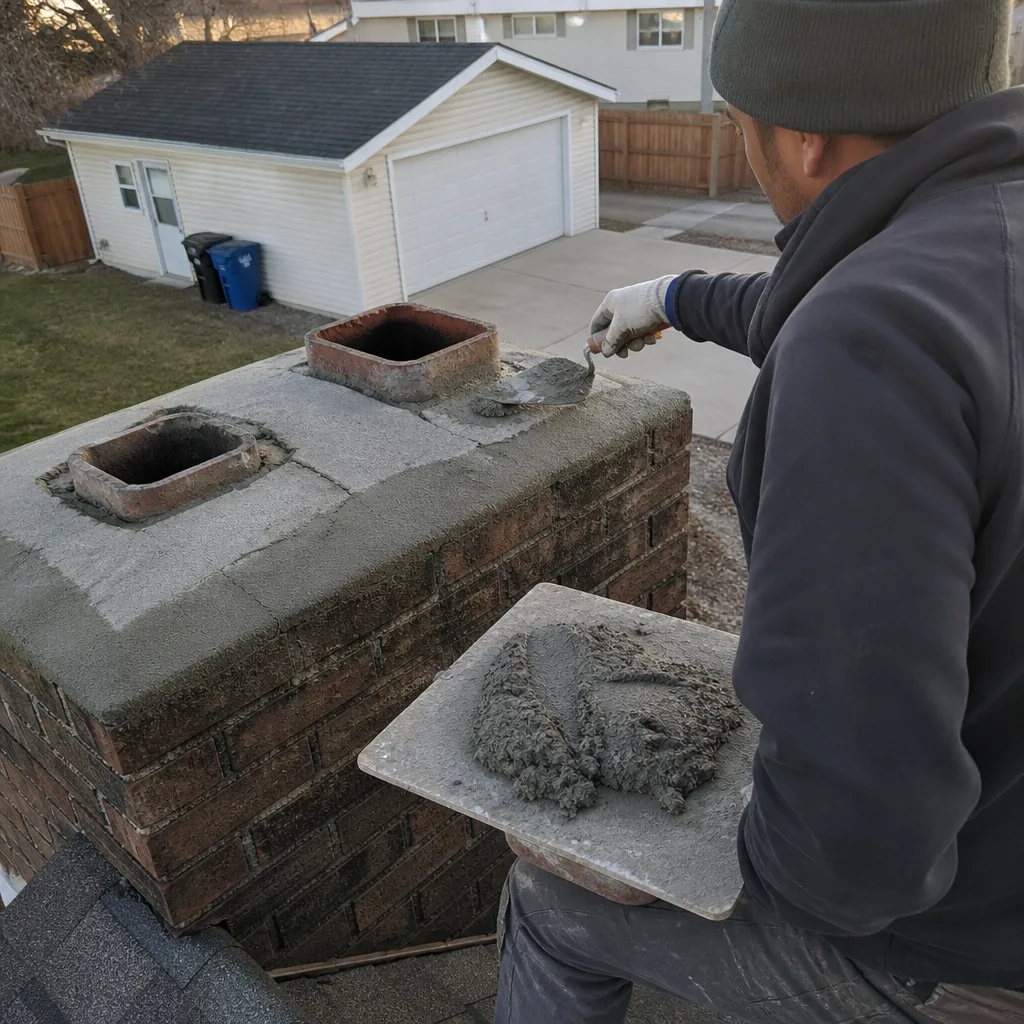
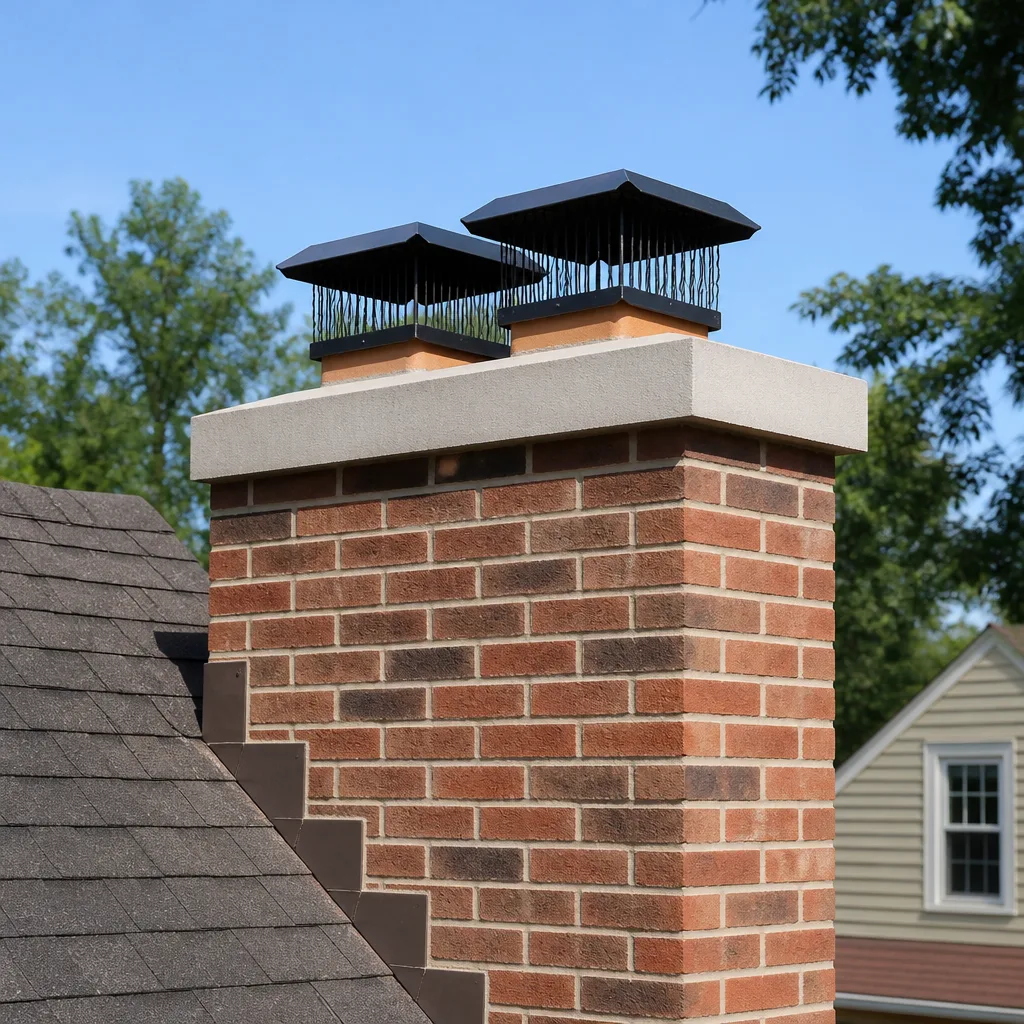
- Moisture intrusion. Rain and snow getting into a chimney degrade the masonry, the firebox, and the crown. A cap and crown installation using Gelco and Famco components is a purpose-built barrier most hardware-store parts don’t match. A brush has no effect on moisture.
- Structural compromise. Cracks in the flue tile, a failed smoke chamber, or a firebox that’s spalling. These are the things a camera inspection finds and a brush can’t.
The takeaway: brushing without inspecting is like changing your oil without ever looking at the brakes. One part of the system gets attention while the parts that actually stop a problem get ignored.
What a Real Inspection Looks Like (and Why “Clean” Isn’t the Same as “Checked”)
We offer chimney inspections aligned with NFPA 211 standard levels – the industry benchmark for thoroughness. The numbers matter, so here’s the plain version.
- Level 1 inspection. A visual check of the readily accessible parts of the chimney and venting system. Appropriate when nothing has changed and you’re not buying or selling the home. Combined with a sweep, this is the yearly routine for most homeowners in West Valley City.
- Level 2 inspection. Everything in Level 1, plus a camera inspection of the flue interior and access to areas that aren’t visible from the firebox. Required in real estate transactions and recommended after a chimney fire, a chimney collapse, or a change in fuel type or appliance. This is the level that catches a cracked tile, a hidden offset, or evidence of a past fire.
The camera and the photo report are the parts a DIYer simply cannot reproduce. If you’re going to brush your own chimney, the most important thing you can do for your home is get one of these inspections done properly, at least every two years. That gives you a real baseline. Then your brush job has context: you know what you’re sweeping, why, and what doesn’t need attention this year.
The other half of the inspection is the sweep itself, done right. If your fireplace is burning poorly or you’re noticing smoke coming into the room, the issue might be a damaged firebox or damper, and that falls under fireplace repair, not cleaning. Our technicians have up to 14 years of experience diagnosing that difference, and we carry the equipment to fix it in the same visit.
The Insurance and Documentation Angle Nobody Explains
Here’s a piece of the DIY vs professional question that most guides leave out entirely: if there’s a chimney-related claim, what does your insurer want to see?
Every policy is different, and we can’t tell you what your specific policy requires. But it’s common for homeowner policies to look for evidence that the chimney was maintained and inspected by a qualified professional when a fire or smoke damage claim is filed. A record of professional inspections and sweeps is documentation. A homeowner’s brush in the garage isn’t. Before you decide on DIY, call your insurance agent and ask two questions:
- Does my policy require professional chimney inspection or cleaning records in the event of a fire or smoke damage claim?
- Does the policy exclude or limit claims related to deferred chimney maintenance?
Ask before you need the answer. Insurers care about documentation the same way they care about receipts. If a professional inspection report is even part of what they’ll want, that’s a strong argument for having one on file – even if you brush your own chimney in between.
West Valley City Climate, Housing, and Why Local Context Matters
West Valley City sits in the Salt Lake Valley, and the local conditions shape what a chimney actually deals with. Winters here get cold enough that wood-burning fireplaces see real, sustained use through the heating season. Cold, dense air and temperature inversions along the valley floor can affect draft, and a flue that vents poorly in a cold snap builds creosote faster than the same appliance would in a milder climate. If you notice smoke rolling back into the room on cold mornings, that’s a clue, not a coincidence.
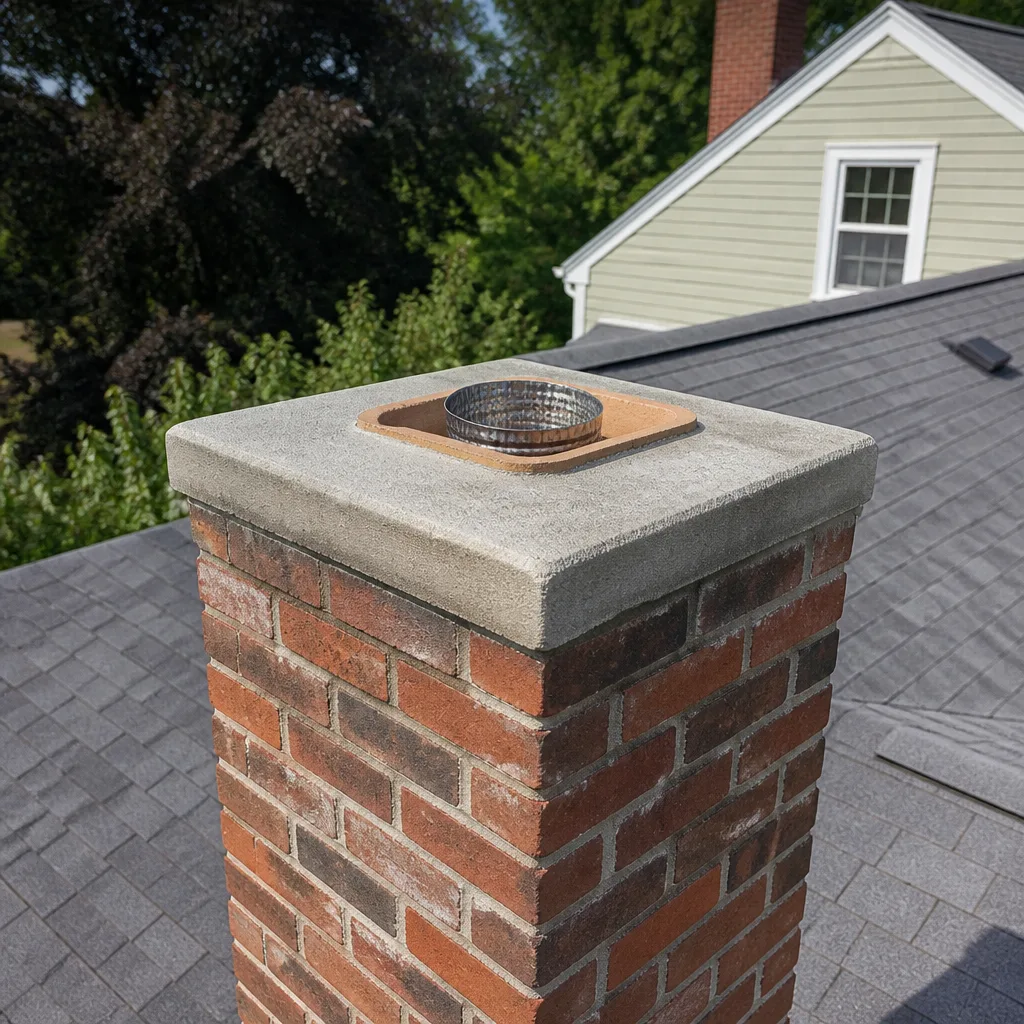
The housing stock matters too. Much of West Valley City’s older residential inventory was built with clay tile liners, and clay cracks as the decades pass. Realtors and homeowners in neighborhoods like Hunter, Granger, and Chesterfield deal with this regularly. When a flue has a cracked clay liner, brushing alone doesn’t solve the problem the crack represents. A DuraFlex flexible stainless liner is a code-compliant answer for older or offset chimneys where a rigid liner can’t make the run. DuraFlex systems are UL-listed for use with wood, gas, and oil appliances, which is a real credential and not a marketing line.
We also see a lot of fireplaces that were converted or added on over the years without anyone updating the liner or cap to match. If your home was built or retrofitted in an unfamiliar era, the first step is a chimney sweep paired with a Level 2 inspection so you know what you’re working with. From there, cap and crown work, chimney cap & crown installation, and fireplace repair all live in the same place, which means you don’t have to track down three contractors for three problems. If you’ve searched for a Chimney Sweep West Valley City before and ended up with a generalist who only brushed, that’s exactly the gap we built our service around.
Common Mistakes to Avoid
- Brushing without an inspection first. You’re sweeping a chimney you’ve never looked inside. Get the camera work done first so your brush job has context, or combine both in one visit. In a valley where cold snaps drive heavy fireplace use, that baseline matters.
- Using a brush that doesn’t match the flue. A round brush in a square flue misses the corners. An oversized brush gets stuck. A wire brush on a stainless liner can scratch it. Match the brush to the flue or don’t buy one.
- Skipping the cap. A missing or broken cap is the number one cause of animal nests and water intrusion in West Valley City chimneys. A brush doesn’t keep a bird out. A cap does.
- Assuming stage-1 creosote because the fire looked fine. Plenty of stage-2 or stage-3 chimneys have been burning without obvious symptoms. Flue appearance and fire behavior aren’t the same thing.
- Ignoring an unexplained hot burn. If a fire was louder or hotter than usual and went out on its own, treat it as a possible chimney fire and get a Level 2 inspection. Don’t brush it and move on.
- DIY on an offset or complex flue. Rigid rods don’t turn corners. If you can’t reach it, you can’t clean it, and the missed section is where the trouble hides.
- Forgetting the paper trail. If you’re not getting a written inspection report, you’re accepting the risk with no record. Most people only realize that matters after the fact.
See the difference
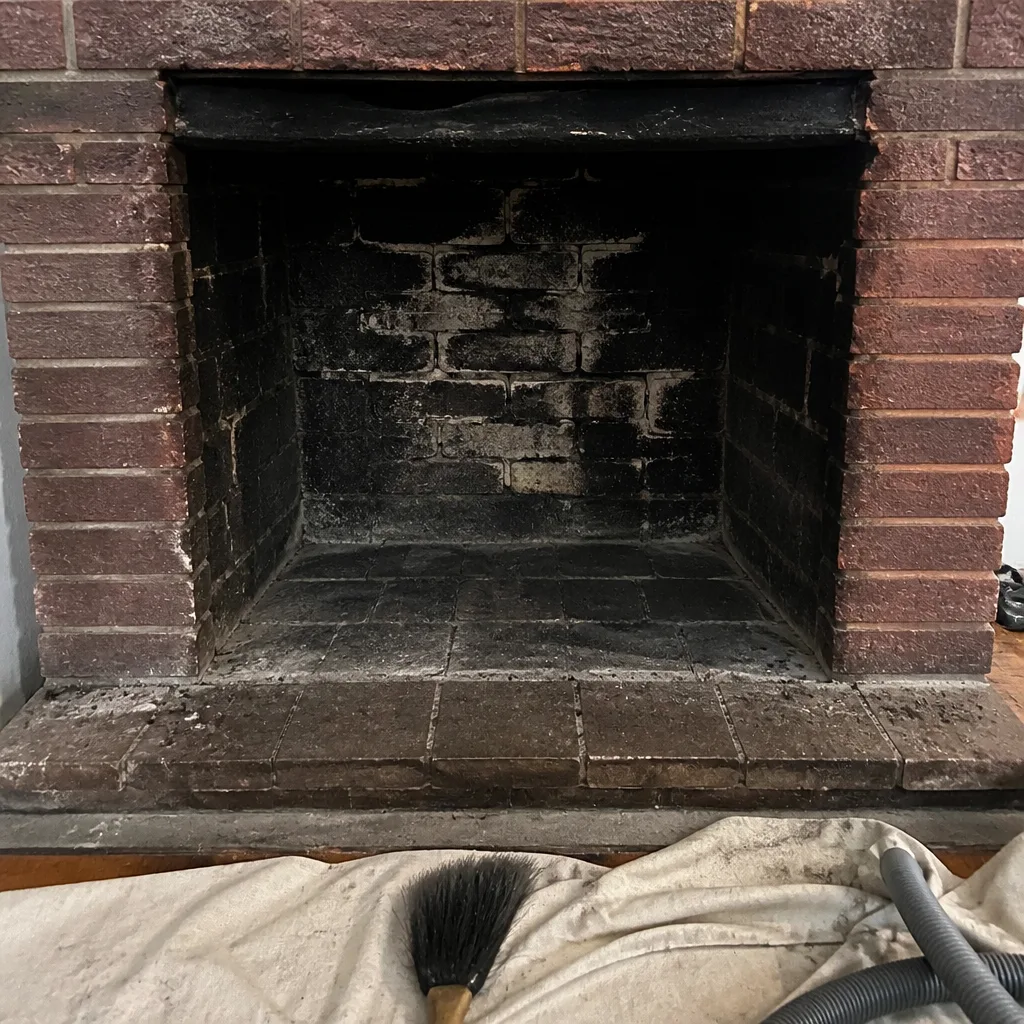 Before
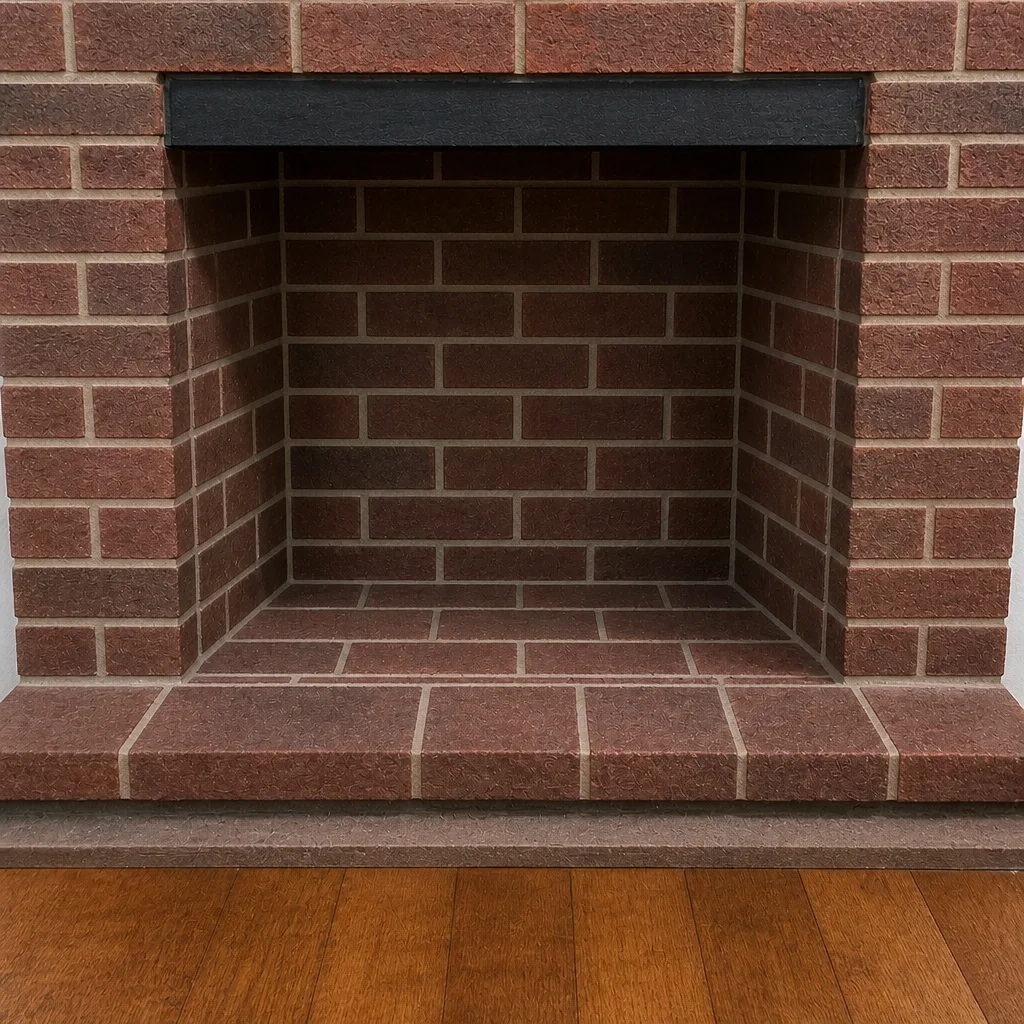 After
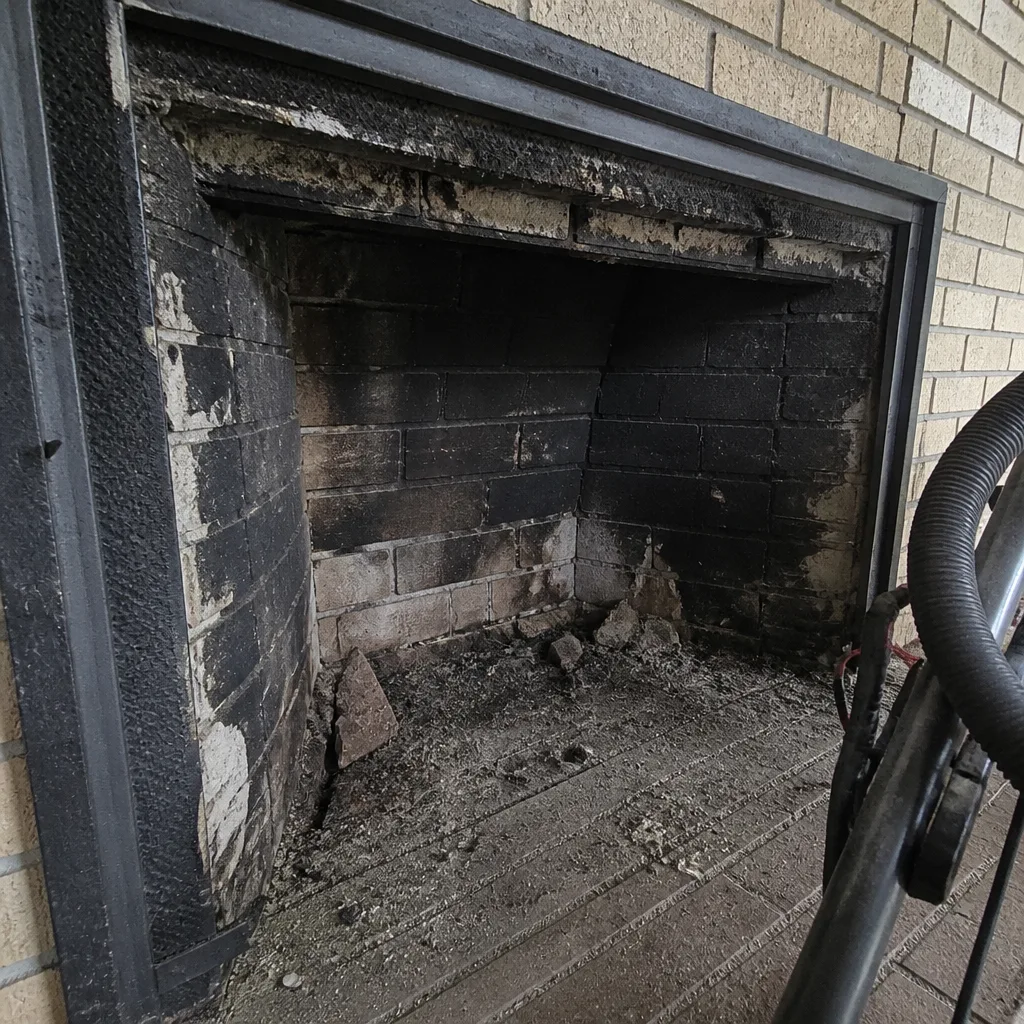 Before
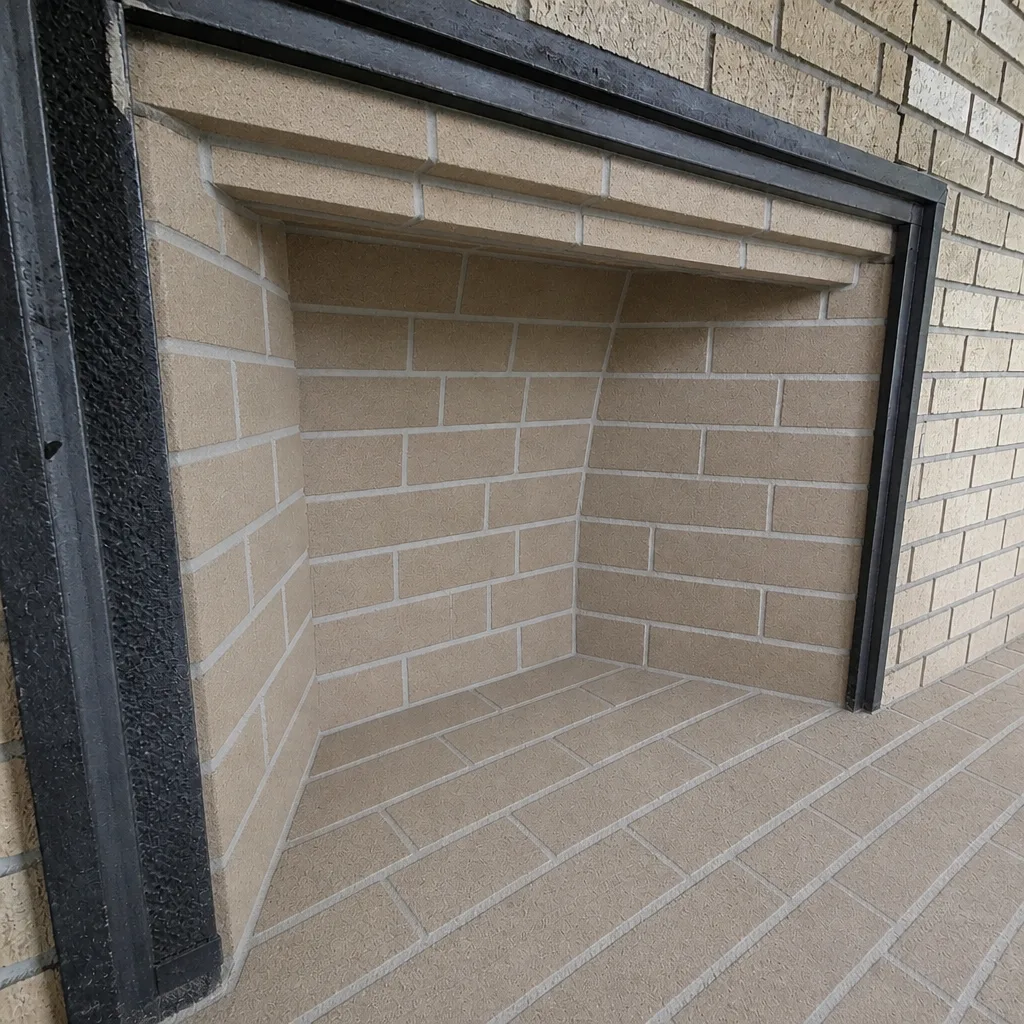 After
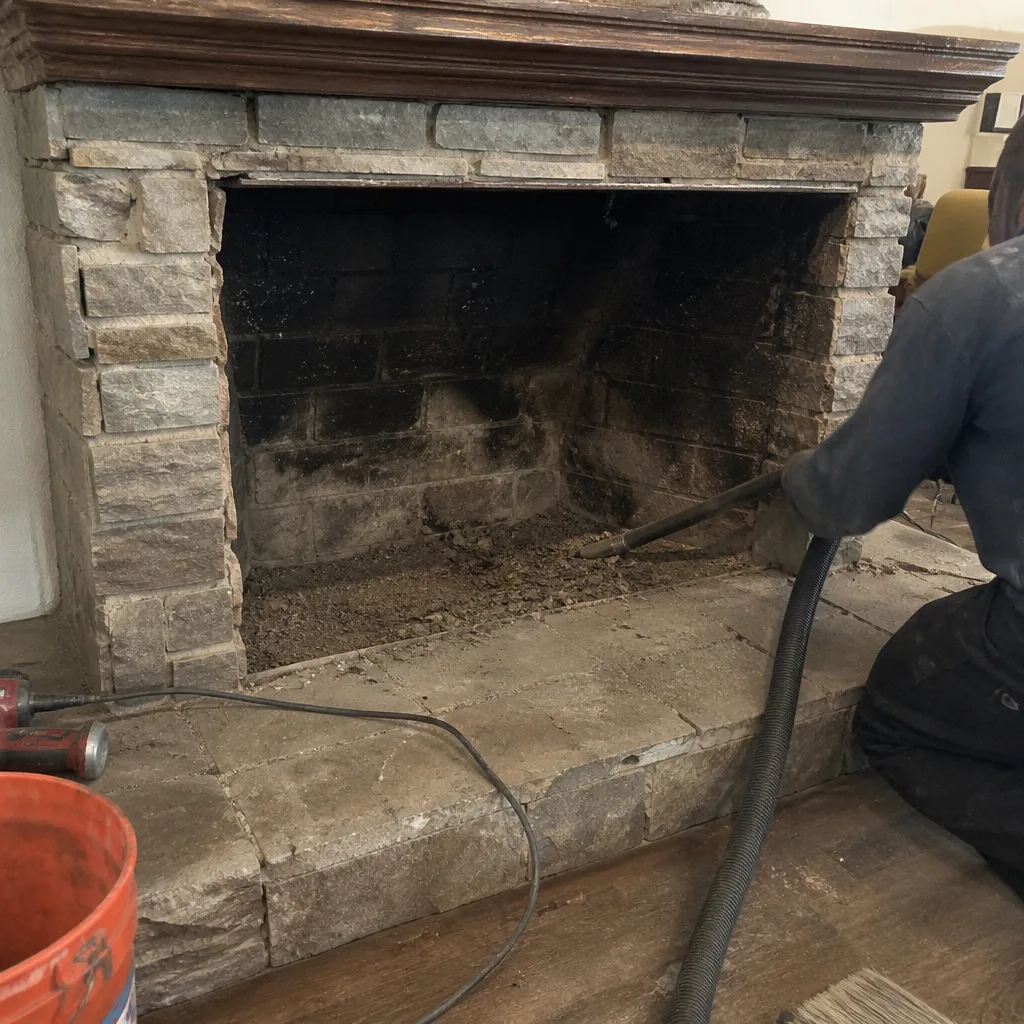 Before
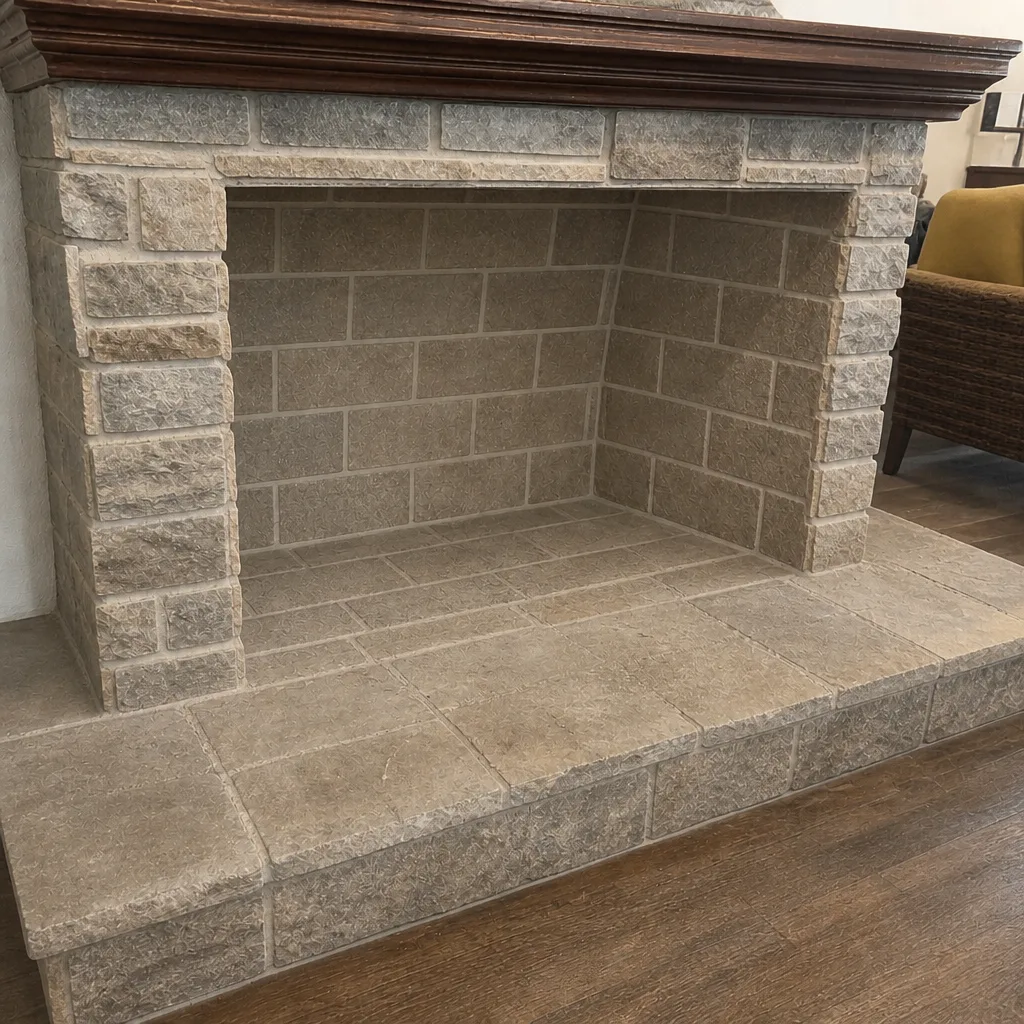 After
When to Call a Professional
Call a professional if any of the following apply: stage-2 or stage-3 creosote on the flue walls, any history of a possible chimney fire, a clay tile liner in an older home, an offset flue, visible smoke coming back into the room, staining on the ceiling near the chimney, an animal nest or obstruction, or a chimney that hasn’t had a professional inspection in over two years. If your home has had any of those, brushing it yourself doesn’t just leave a problem unresolved; it leaves you without the information you need to make the next decision. Chimney Sweep West Valley City offers free estimates in West Valley City. Call (844) 625-7149. We answer 24/7. Fast dispatch from 7am to 7pm, Sunday through Friday.
Frequently Asked Questions
A professional chimney sweep in West Valley City typically runs $150 to $300 for a single flue, and a combined sweep and inspection usually lands between $225 and $600 depending on the level of inspection. The exact price is set by the written estimate, and we agree on it before any work begins, so there’s no surprise. Call (844) 625-7149 for an exact quote – estimates are free.
You only need a new liner if the inspection shows the existing one can’t safely contain heat and combustion gases – visible cracks, gaps, or a liner material worn beyond service. Nothing gets recommended without camera evidence you can see for yourself, and we’ll tell you plainly when a liner can wait and when it can’t. If a full reline isn’t necessary, HeatShield resurfacing can restore a compromised tile flue at lower cost. Call (844) 625-7149 for an exact quote before deciding anything.
Most wood-burning chimneys should be swept once a year, with a professional inspection every year or every two depending on use, per NFPA 211 guidance. Heavy use or an appliance that burns poorly means checking more often. Gas fireplaces need less frequent sweeping but still need an inspection to catch liner and venting problems. Call (844) 625-7149 for an exact quote on a sweep based on your setup.
The specific hazard depends on what’s actually wrong with your chimney – creosote can ignite, a cracked liner can let heat or carbon monoxide reach framing, and a bad crown can let water slowly ruin the masonry. Symptoms often stay hidden until something fails. That’s why we don’t recommend skipping the inspection even when you brush yourself. Call (844) 625-7149 for an exact quote and get a documented baseline on your system.
Partially. You can clean loose stage-1 creosote from an accessible flue with a proper brush and a HEPA vacuum, but you can’t assess liner integrity, detect hidden fire damage, or evaluate your crown and flashing without professional equipment. The realistic compromise is DIY brushing between professional inspections every year or two. Call (844) 625-7149 to schedule an inspection that gives you a real baseline.
It might not – many policies look for documentation from a qualified professional in the event of a chimney-related claim, though it varies by policy and insurer. A written inspection report from a professional is documentation; a receipt for a brush kit generally isn’t. Ask your agent before you need the answer, and call (844) 625-7149 if you want an inspection report on file for your West Valley City home.
The Bottom Line
DIY chimney sweeping isn’t wrong; it’s incomplete. A brush removes light creosote, and if that’s the only problem your chimney has, you can handle it. But an inspection is what tells you which problem you actually have, and that requires a camera, a trained eye, and a standard – NFPA 211, not a guess. Get the inspection first, even if you plan to brush between visits. That baseline is what makes your chimney safe, insurable, and properly maintained. If you’d rather do the sweep, inspection, cap work, and any repair in one visit from one specialist, that’s exactly what we do. We work with professional-grade brands including DuraFlex, HeatShield, Gelco, Olympia Chimney, Famco, and Copperfield, so the parts on your chimney hold up the way they should. Call our team at Chimney Sweep West Valley City at (844) 625-7149 for a free estimate. We answer 24/7. Fast dispatch from 7am to 7pm, Sunday through Friday.
Written by the team at Chimney Sweep West Valley City.