
Last updated November 25, 2026
 Sweep & inspection
 Caps & crowns
 Flue relining
 Masonry repair
 Gas fireplace service
Level 1 sweep and inspection to the NFPA 211 annual standard - flue, crown, cap, and flashing checked and photographed
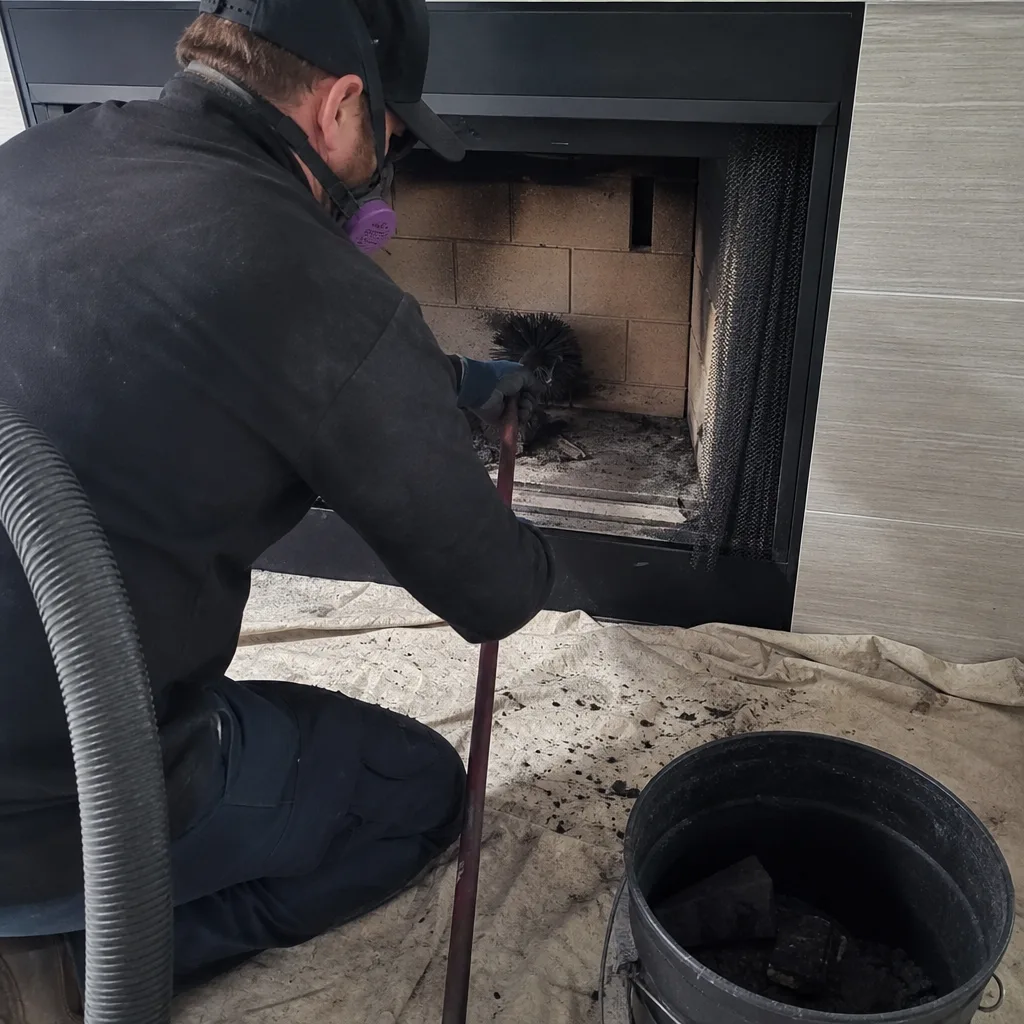
Chimney sweep logs do not sweep chimneys. They loosen some creosote - which then falls where a brush and vacuum still have to collect it.
Chimney Cleaning Warning Signs: A West Valley City Homeowner’s Reference Guide
Most homeowners assume a chimney problem announces itself with smoke rolling into the room or a fire that won’t light. In our experience, the earliest warnings are quieter than that. A faint campfire smell on a hot afternoon with no fire burning. A chalky white stain spreading across the brick. A damper that closes but doesn’t quite seal. A chimney that smells like a campfire in July, with nothing lit, is not a quirk of the season. It’s a ventilation failure telling you combustion byproducts have somewhere to go other than up the flue. This guide is a symptom-to-cause reference for West Valley City homeowners, so you can read those signals correctly and know which ones mean “schedule a sweep” and which mean “don’t light a fire until someone looks at this.”
Styles & brands we work with
- Sweep & inspection
- Caps & crowns
- Flue relining
- Masonry repair
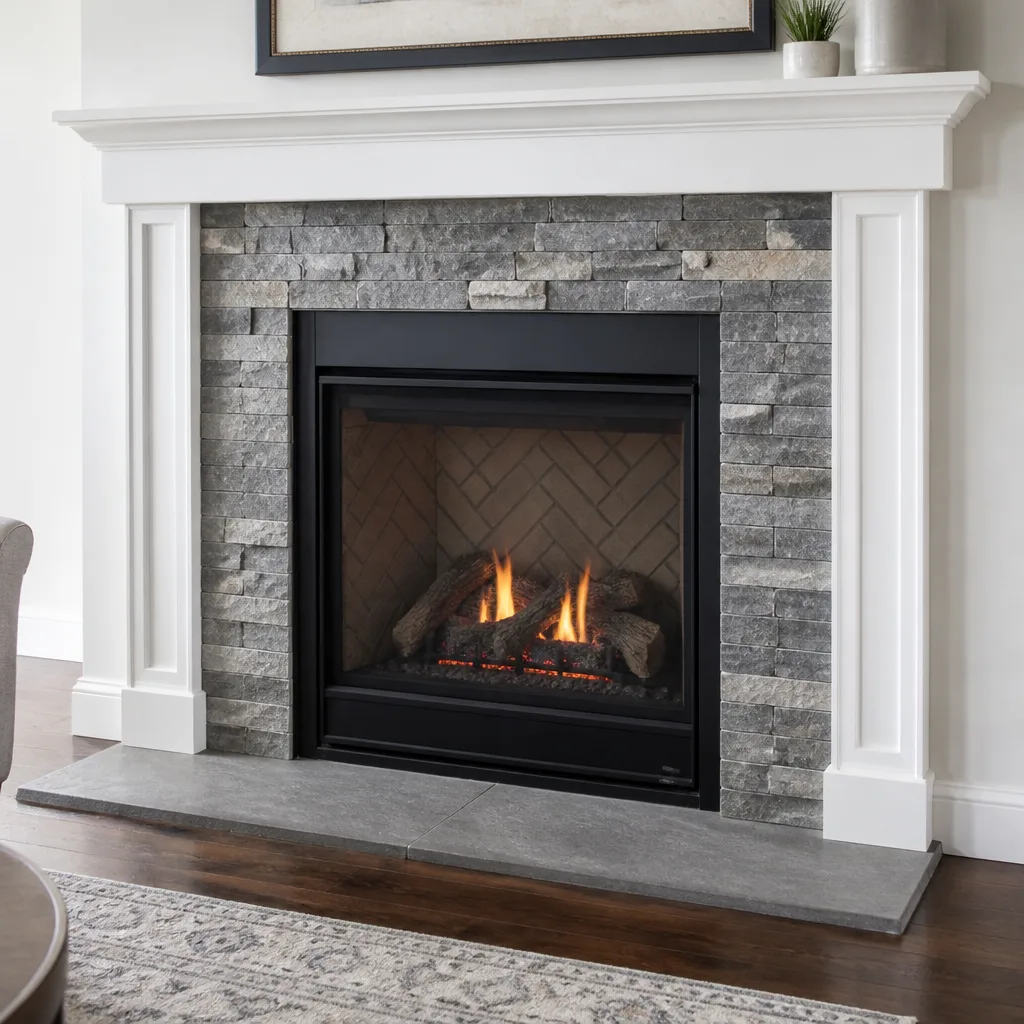
- Gas fireplace service
Quick Answer
The warning signs that matter most are a campfire or sulfur smell when no fire is burning, flaking or crumbling flue tile at the firebox throat, rust on the damper, white efflorescence staining on exterior brick, a cracked crown, smoke that billows into the room, and a fire that’s hard to start no matter how dry the wood. Any of these means your chimney needs a professional inspection before you burn again. Smells and exterior staining usually mean “schedule soon”; smoke in the room, puffback soot, or a sharp chemical odor after a fire means “stop burning until it’s checked.”
Table of Contents
- Why Chimney Warning Signs Get Misread
- The Smell Index: What Your Chimney’s Odor Is Telling You
- Visual Warnings Inside the Firebox
- Exterior Warning Signs a West Valley City Homeowner Can Spot
- Performance Warnings: When the Chimney Isn’t Doing Its Job
- Which Signs Mean “Schedule Soon” vs. “Do Not Light a Fire”
- West Valley City Conditions That Accelerate Chimney Wear
- Common Mistakes to Avoid
- When to Call a Professional
- Frequently Asked Questions
Why Chimney Warning Signs Get Misread
A chimney is one of the few systems in your home that gives you almost no feedback during normal use. The furnace tells you when its filter is clogged. The water heater lets you know when the burner’s struggling. The chimney just quietly vents smoke and byproducts, year after year, until something forces the issue.
That silence is the problem. By the time a fire produces obvious trouble, you’ve usually been living with a smaller warning for a while without recognizing it. Most of what we look for during a Chimney Sweep West Valley City visit falls into one of three families: smells, visual cues, and performance changes. Each points to a different set of causes, and learning to read them is what separates an early, easy repair from an expensive one.
Part of the challenge is knowing what “normal” feels and smells like. A wood-burning fireplace has a slight smoky smell when the fire’s out, especially after the first cold snap. That’s normal. What’s not normal is smelling smoke in the middle of summer, or catching an odor that isn’t wood smoke at all. Knowing the difference takes a reference point you may not have, and that’s what this guide is for.
West Valley City sits in a valley basin, and that geography plays a role here. Cold air settles low on winter mornings, and chimney draft is weakest during those hours. It’s common to have smells and performance issues that show up only in cold-weather inversions, then disappear by afternoon. That’s a signal worth noting, not a reason to shrug. Mark it down and mention it when you call.
The Smell Index: What Your Chimney’s Odor Is Telling You
Smell is the fastest warning channel your chimney has. Humans are remarkably good at detecting the subtle difference between a chimney that’s behaving and one that isn’t, once they know what to pay attention to. Here’s the reference:
Campfire odor with no fire burning
You walk past the fireplace on a warm afternoon and catch the smell of a campfire, except nothing’s burning. That’s a downdraft signal. The flue has creosote deposits that hold onto smoke odor, and the chimney’s ventilation has reversed. Instead of pulling air up, it’s pushing stale flue air back into the living space. Two conditions cause this: a build-up of creosote in the flue that holds onto the smell, and a pressure difference in the house that pulls smoke-rich air back down. A chimney sweep removes the creosote layer that holds the smell, and a cap and top-sealing damper can address the pressure side.
Sulfur smell
A faint rotten-egg or sulfur odor usually points to moisture combining with organic debris in the flue. Leaves, bird nests, and creosote mixed with water produce that distinctive smell. In a West Valley City climate with snow melt in spring and fall rainstorms, moisture intrusion is one of the most common causes we see for this odor. It’s a manageable problem, but it usually means the cap or crown isn’t doing its job anymore.
Sharp chemical smell
This one matters most. A sharp, almost acrid smell after a fire, combined with a metallic or burnt-rubber note, is often the signature of third-degree creosote or the aftermath of a chimney fire you didn’t know you had. It warrants stopping all fireplace use until a professional inspection confirms the flue’s condition. Note: this smell is a warning, not a diagnosis. It’s what you tell the inspector when you call.
Visual Warnings Inside the Firebox
Many of the most reliable warning signs are visible from a flashlight and a knee bend. Here’s what to look for next time you have the fireplace open.
- Flaking or crumbling flue tile at the firebox throat. The first flue tile above the damper is where heat is most intense. Spalling, or the surface breaking away in flakes, is a sign that the liner is losing integrity. Heat and moisture cycling in a West Valley City winter can accelerate this.
- Rust staining on the damper plate. Rust on the metal damper means moisture is getting into the chimney. Water has to be entering from above (a failed crown or cap) or condensing in a flue that stays cold. Either way, the cap or crown work around it needs checking.
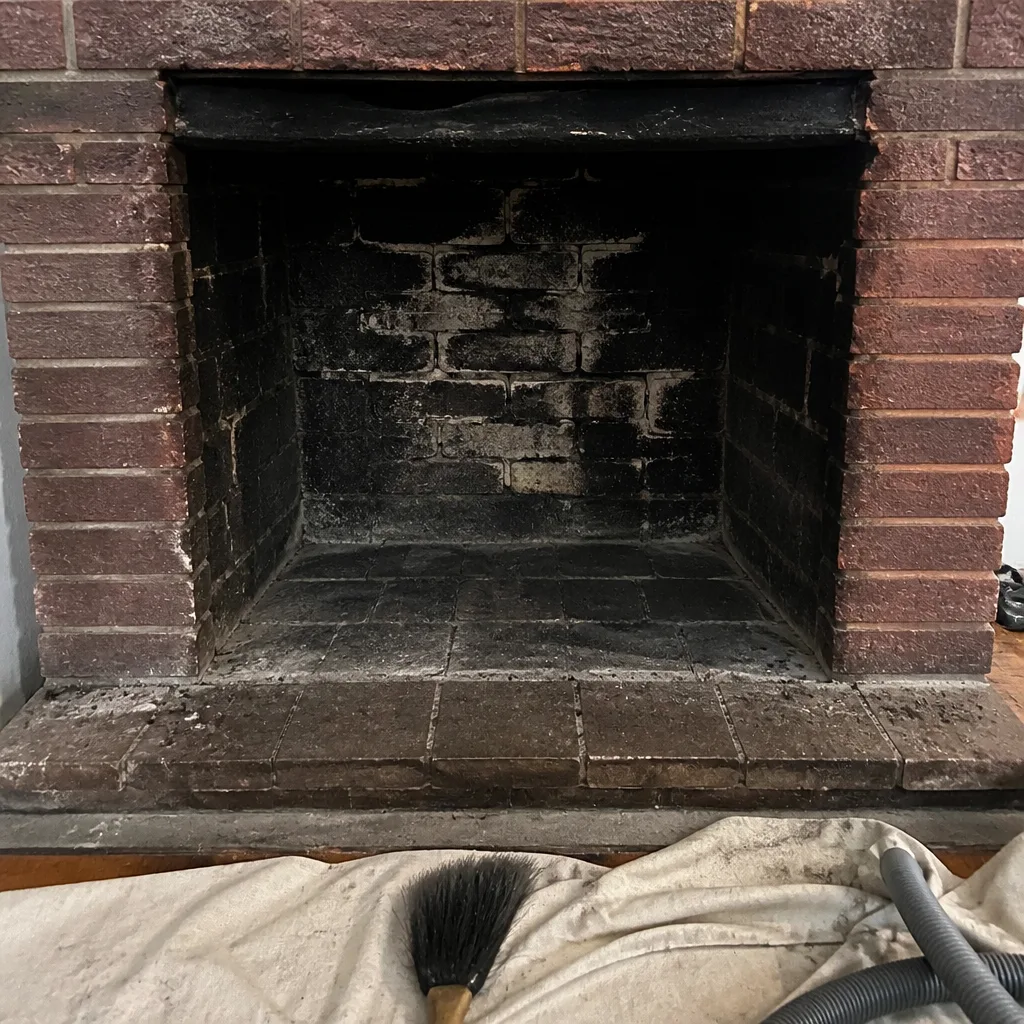
- Puffback soot on the fireplace face. If soot appears as a spatter pattern on the face of the fireplace opening rather than as a natural smoke stain, that’s a puffback pattern. It tells you smoke is being pushed back into the room, not pulled up the flue. That’s a ventilation failure.
- Cracked or missing firebrick. Firebrick is designed to protect the masonry behind it. When firebrick cracks, the brick and mortar behind it start to see direct heat and can eventually fail.
- Damper that won’t seal fully. Shine a flashlight up from the firebox with the damper closed. If you can see daylight, air is leaking. That’s the source of most cold-season draft and a contributor to the smell issues above.
None of these require you to climb a ladder or open a flue. They’re what you can see from in front of the fireplace. Anything you spot here is worth mentioning to the fireplace repair specialist when they arrive.
Exterior Warning Signs a West Valley City Homeowner Can Spot
You don’t need to get on the roof to read the outside of your chimney. A pair of binoculars from the driveway will show you more than you’d expect.
White efflorescence staining on brick
A chalky white mineral stain creeping across the brick is called efflorescence, and it means moisture is moving through the masonry and evaporating on the surface. The moisture itself is the problem. It comes from a failed crown, a cracked cap, or water getting behind the brick at the flashing. Left alone, efflorescence can progress to spalling, where the brick face actually breaks away. In a high-desert valley like West Valley City, freeze-thaw cycles across the winter make this worse than it would be in a mild climate.
Missing or cracked crown
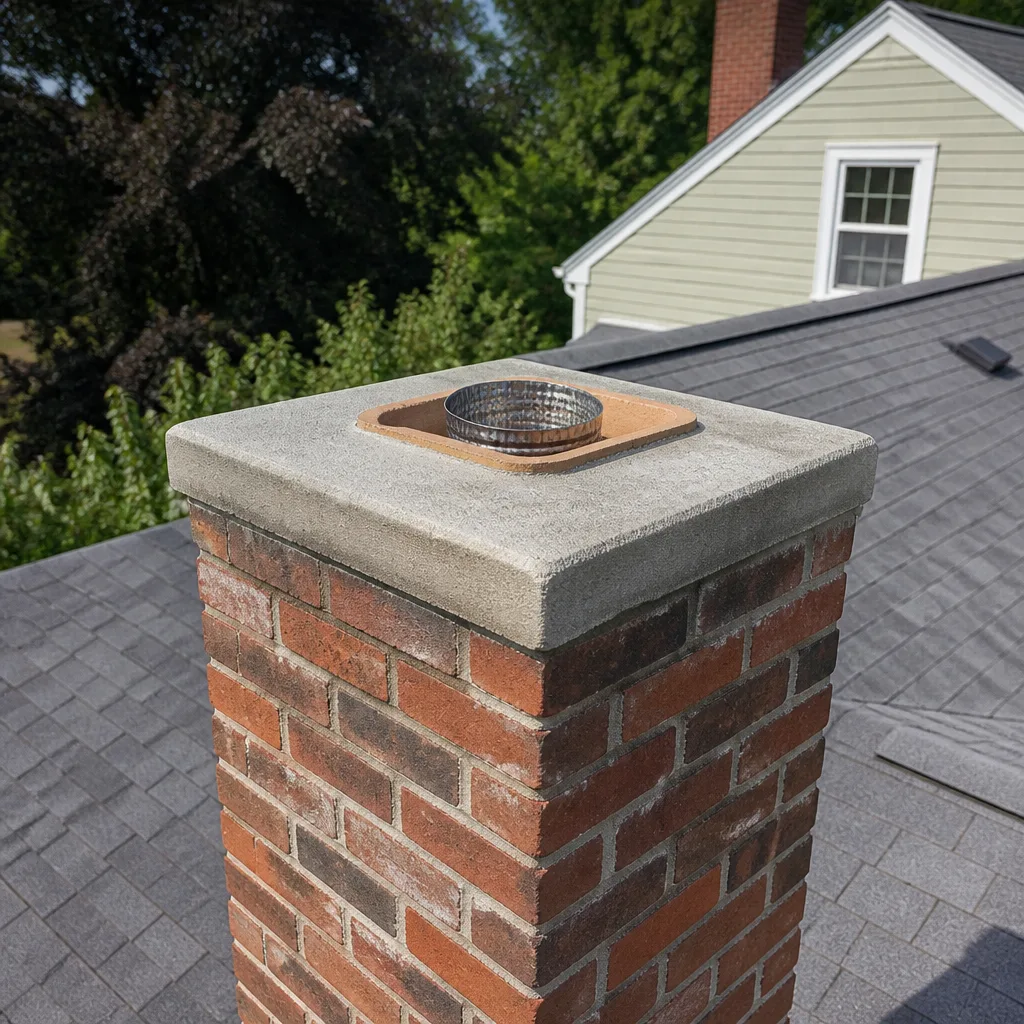
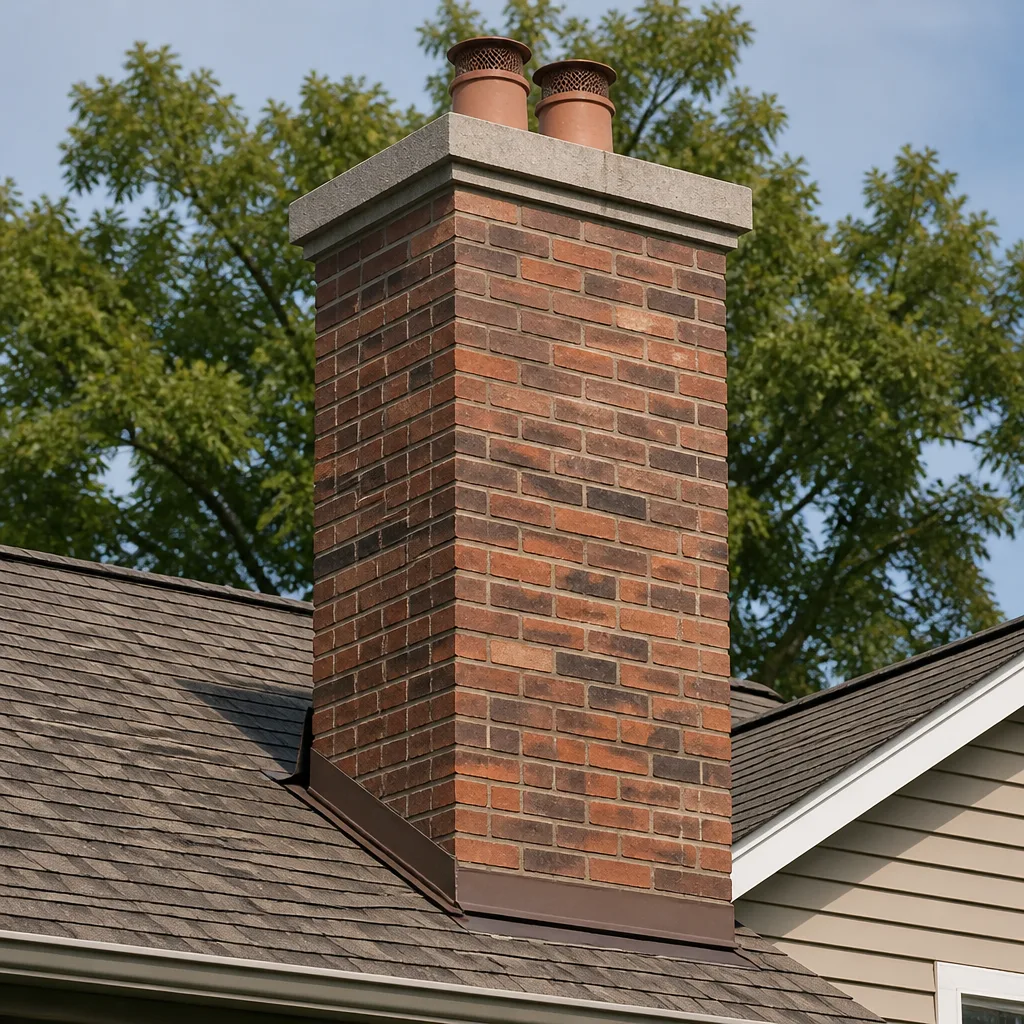
The crown is the sloped concrete cap that sits at the top of the chimney and sheds water away from the masonry. When it cracks, water leaks directly into the flue. When it’s missing entirely, every rain and snowmelt event is a moisture event. A purpose-built crown using Gelco or Famco components lasts far longer than the poured concrete versions that fail in a few seasons.
Deteriorating mortar joints at the roofline
Mortar at the roofline takes the most weather in the whole chimney. Horizontal mortar joints, the wide ones between brick courses, are the first to go. Crumbling or recessed joints mean water can enter the wall behind the brick. That’s a structural repair rather than a cleaning issue. A chimney cap & crown check at the same visit is the most efficient way to address the source.
Tilted or missing chimney cap
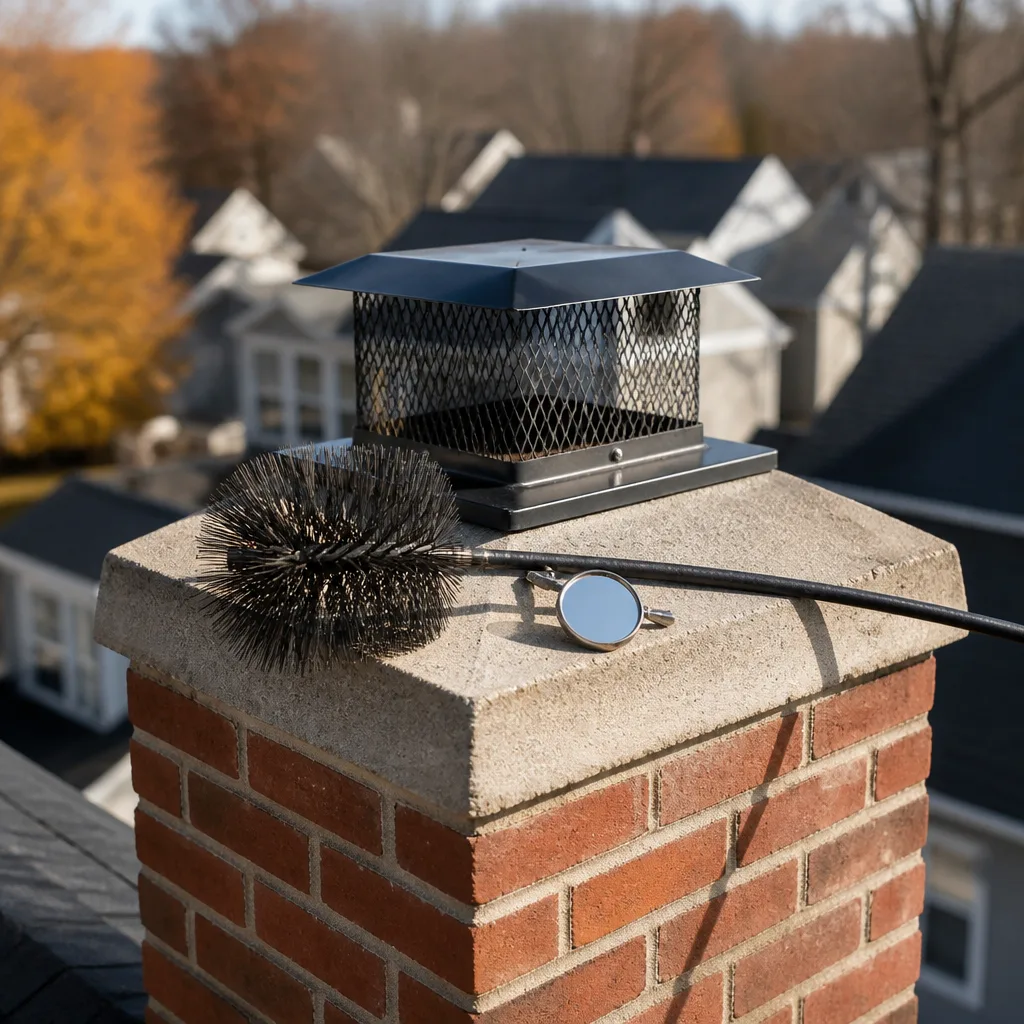
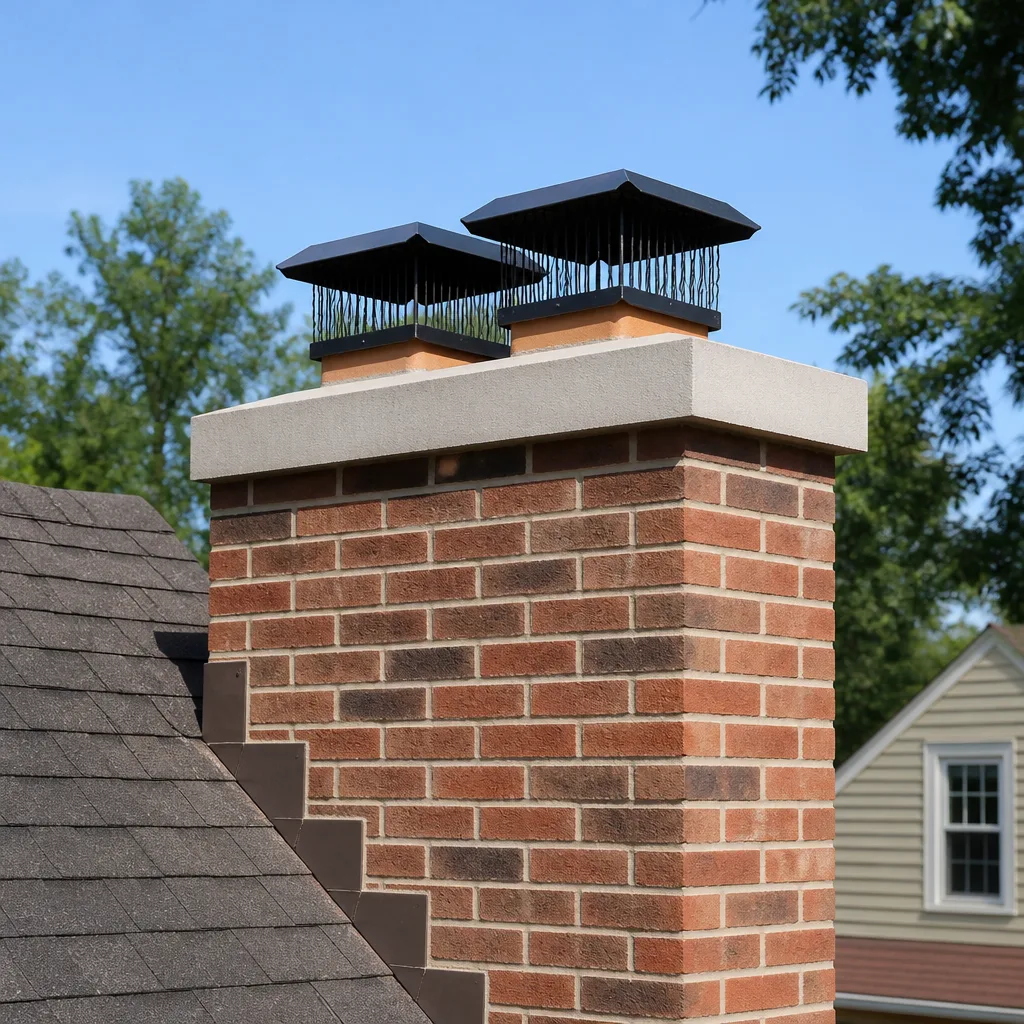
The cap keeps water out and animals from getting in. A tilted cap is the most common cause of bird nests and debris, which in turn cause the sulfur smell and flow issues covered earlier. Olympia Chimney and Gelco make caps that fit most standard flue sizes without custom fabrication.
Performance Warnings: When the Chimney Isn’t Doing Its Job
Performance issues show up as changes in how the fireplace behaves, and they’re easy to dismiss because they build up gradually. Here’s how to read them.
Smoke that billows into the room
Smoke entering the living space is the clearest sign your chimney has lost its draft. Causes include an obstructed flue, a blocked or missing cap, a negative-pressure house, or a compromised liner. This is a stop-burning sign. Don’t keep the fire going to “see if it improves.”
Fires that are hard to start
If your fires are consistently hard to start regardless of the wood quality, the issue isn’t the wood. It’s the draft, and a flue that won’t pull enough air will smolder and smoke rather than burn clean. That’s a real inefficiency problem and an early sign of creosote build-up.
A damper that won’t open or close cleanly
A damper that sticks, won’t seal, or won’t open fully has probably seen moisture, corrosion, or debris from above. Left alone, it goes from “annoying” to “dangerous” the day it fails in the open position.
Draft complaints that start when the weather turns cold
In West Valley City, this pattern is especially common. During a cold-air inversion, chimney draft is at its weakest, and that’s when performance problems show up. If you only notice issues on cold winter mornings and not in milder weather, note that pattern. It’s useful for the inspection and it may point to ventilation rather than obstruction.
Which Signs Mean “Schedule Soon” vs. “Do Not Light a Fire”
Not every sign deserves the same urgency. Grouping them by risk tier helps you know what to do right now and what can wait until the technician’s next opening.
Tier 1: Do not light a fire until inspected
- Smoke billowing into the room during use.
- Puffback soot spattering the fireplace face.
- A sharp chemical or metallic smell after a fire.
- Any sign of a chimney fire you weren’t aware of (charred creosote, warped damper, cracked liner).
- Carbon monoxide alarm triggered with the fireplace in use.
Rather than relight the fire, call for an inspection and, if you have other heating, use it until the flue has been checked. There’s no penalty for waiting a day. There’s plenty for a fire that ignites creosote layered in the flue. Call (844) 625-7149. We answer 24/7.
Tier 2: Schedule within a few weeks
- Campfire smell with no fire burning, especially in summer.
- Flaking flue tile at the firebox throat.
- Rust staining on the damper plate.
- Efflorescence staining on exterior brick.
- Visible mortar deterioration at the roofline.
- Damper that won’t seal completely.
These are deterioration signals. They won’t turn into an emergency on their own, but left alone for a season or two they become more expensive repairs.
Tier 3: Schedule within the next few months
- Fires hard to start regardless of wood quality.
- Tilted cap or cap with visible debris buildup.
- Recurring drafts or smoky smell on cold mornings only.
- Annual sweep due (NFPA 211 recommends an annual inspection for most wood-burning chimneys).
The Tier 3 list is what a routine annual sweep catches before it becomes Tier 2.
West Valley City Conditions That Accelerate Chimney Wear
Not every chimney wears the same way. In our experience, the combination of a cold valley basin winter and a dry summer produces a specific pattern of wear that’s worth understanding.
The freeze-thaw cycle from November through March is the most aggressive chimney force in this area. Water gets into a hairline crack in the crown, expands overnight when the temperature drops, and widens the crack. Do that over the course of one winter and a small crack becomes a repair. The same process attacks mortar joints at the roofline and efflorescence on the brick face. Quality crowns from Gelco and Famco are built for this; poured-in-place concrete ones usually aren’t.
The dry summer produces the other half of the problem. Low humidity and high heat dry out creosote deposits into a hard, glazed state that a standard brush can’t always remove. That’s what creates the sharp chemical smell after a fire and the campfire smell in summer. In those cases, HeatShield flue resurfacing can be the answer, restoring the flue surface without the cost of a full liner replacement.
Cold-morning draft issues are also more common here than in flatter or warmer climates. When the sun comes up, everything works normally. When it’s cold and still, the chimney loses draft. A top-sealing damper and a properly sized cap make a real difference in this climate.
If you’re unsure whether your chimney’s symptoms are climate-driven or structural, an NFPA 211 Level 1 inspection will tell you. That’s a 21-point visual check that catches most of the signs described in this guide without any disassembly.
Common Mistakes to Avoid
- Treating the annual sweep as the whole job. A sweep clears creosote. An inspection tells you what the sweep can’t: liner condition, cap and crown integrity, structural concerns. Schedule both together so nothing goes unseen.
- Ignoring efflorescence as cosmetic. That white stain on the brick is moisture moving through the wall. It’s a structural warning, not a cosmetic one, and it gets worse every winter in this climate.
- Burning through the campfire smell. A downdraft that pushes smoke back into the house won’t fix itself by having a fire on a warmer day. It’s a pressure and creosote issue that needs diagnosis.
- Assuming a general handyman can handle it. Chimney work is a specialty: liner sizing, crown repair, draft diagnosis, and code compliance all require trade-specific knowledge. A generalist with a brush rarely catches half of what this guide describes.
- Skipping the inspection after a chimney fire. Even a small chimney fire can damage the liner in ways a visual sweep won’t catch. An NFPA 211 Level 2 inspection with a camera is what confirms the liner’s condition before the next fire.
- Buying a hardware-store cap to “fix” the crown. A cheap cap won’t shed water the way a purpose-built one will, and it can actually trap moisture at the flue top. Purpose-built caps from recognized manufacturers are built for the years, not the season.
- Waiting for smoke in the room before acting. By the time a fire smokes into the living space, you’ve missed the earlier warning signs that would have made the repair easier and cheaper.
When to Call a Professional
You should call a professional if any of the Tier 1 signs have appeared, if you see efflorescence or mortar deterioration on the exterior brick, or if your annual sweep hasn’t been done in the past year. You should also call if you’re not sure what you’re seeing. A homeowner’s honest observation (“it smells like a campfire in July”) is often the exact information that leads to the right diagnosis.
What sets a proper inspection apart is the combination of trade-specific training and the right brands on hand when a fix is needed. We install DuraFlex liner systems where rigid liners won’t fit, HeatShield resurfacing to restore flue tiles that don’t need full replacement, and purpose-built caps and crowns from Gelco, Famco, and Olympia Chimney. That means one call covers the diagnosis and the repair, without a second contractor coming behind the first.
Our technicians have up to 14 years of experience reading the exact warning signs in this guide. Chimney Sweep West Valley City offers free estimates in West Valley City. Call (844) 625-7149. We answer 24/7. Fast dispatch from 7am to 7pm, Sunday through Friday.
Frequently Asked Questions
A typical chimney sweep in West Valley City runs in the range most valley residents see for a standard sweep of a wood-burning flue. Pricing is set per job by written estimate, so the exact number depends on the flue’s length, access, and current build-up. When you call for the estimate, we’ll tell you what the sweep covers, whether an inspection is bundled in, and what the written price is before any work starts. Call (844) 625-7149 for a free estimate.
For most wood-burning fireplaces, the standard recommendation is an annual sweep and inspection, aligned with the NFPA 211 benchmark. Gas inserts and newer appliances may need less frequent sweeping but still benefit from an annual inspection of the venting and cap. In West Valley City’s climate, the annual check catches freeze-thaw damage to the crown and mortar before it becomes a structural repair. If your fireplace gets heavy use, a mid-season check is a smart addition. Call (844) 625-7149 to book the annual.
Creosote builds up in layers that eventually ignite, and that’s what a chimney fire is. Even without a fire, the flue holds onto smoke odor, draft gets weaker, and moisture damage to the crown and mortar gets worse each winter. The risk of carbon monoxide exposure rises when the flue is partially blocked and combustion byproducts back up into the living space instead of venting out. None of that is reason to panic. It’s reason to book the sweep. Call (844) 625-7149 for a free estimate.
Not always, and a proper inspection answers that question before anything is recommended. In many cases, HeatShield flue resurfacing restores a compromised clay tile flue without the cost of a full liner replacement. When a full liner does make sense, DuraFlex flexible stainless liners are a code-compliant option for older or offset chimneys where rigid liners can’t fit. Nothing is recommended without inspection evidence you can see for yourself. Call (844) 625-7149 and we’ll walk you through what the inspection shows.
Campfire odor in summer with no fire burning means the flue is holding onto smoke odor and pulling stale flue air back into the house. That combination of creosote deposits and reversed draft is the classic downdraft signature. It won’t go away on its own. A sweep clears the creosote layer that holds the smell, and a check of the cap and damper addresses the pressure side. Call (844) 625-7149 to schedule.
A sweep removes creosote deposits from the flue. An inspection assesses the flue’s condition, liner integrity, cap and crown, and overall system safety, aligned with NFPA 211 Level 1 or Level 2 benchmarks. The sweep is a starting point. The inspection tells you what the sweep can’t. Schedule them together whenever possible. Call (844) 625-7149 for a free estimate.
The Bottom Line
Most chimney problems start as small, readable signals: a smell that doesn’t belong, a chalky stain on the brick, flaking tile at the firebox throat, a fire that smolders instead of burning. None of them announce a fire. All of them are worth acting on. The Tier 1 signs (smoke in the room, puffback soot, sharp chemical smell) mean stop burning. The Tier 2 and Tier 3 signs mean schedule a proper inspection and sweep, not a handyman and a brush. In West Valley City’s climate, an annual sweep and inspection catches the freeze-thaw and creosote patterns before they become structural repairs. Call (844) 625-7149 for a free estimate. We answer 24/7. Fast dispatch from 7am to 7pm, Sunday through Friday.
Written by the team at Chimney Sweep West Valley City.
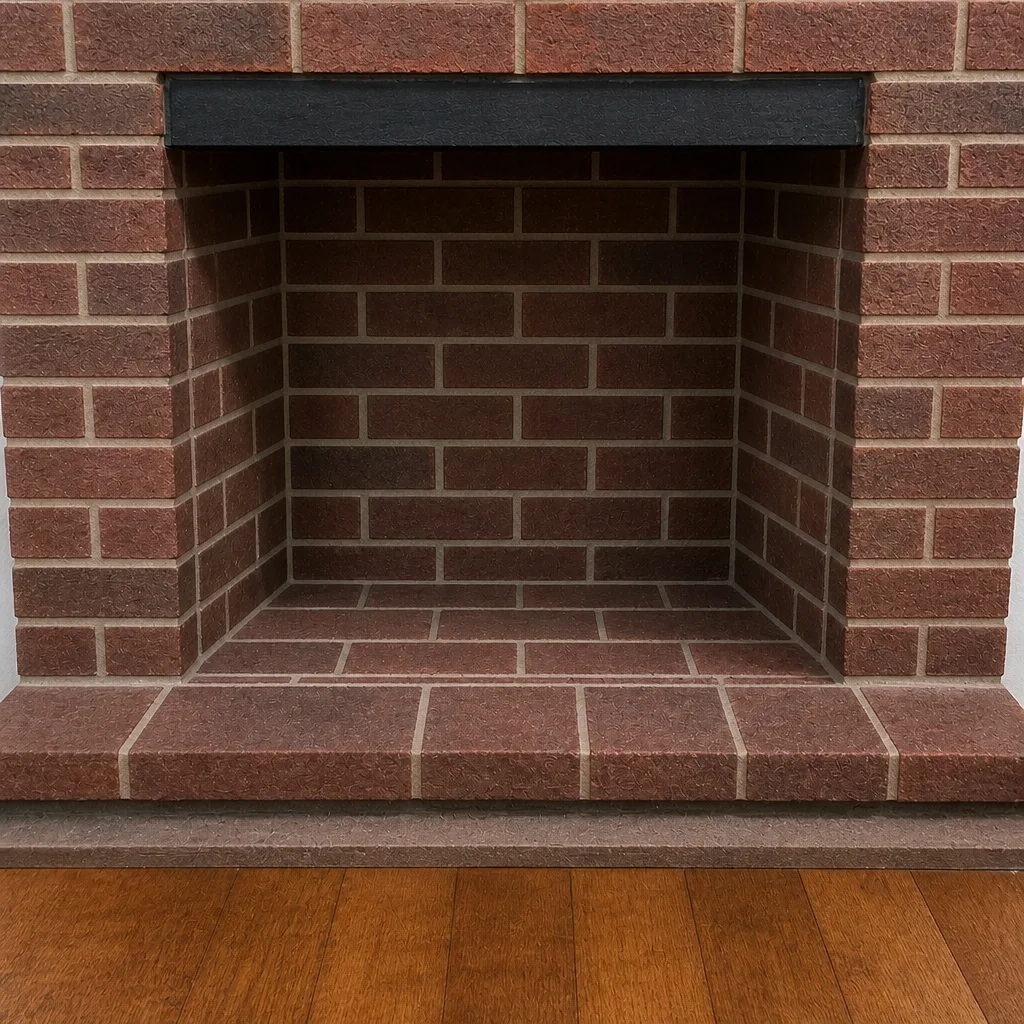
See the difference
 Before
 After
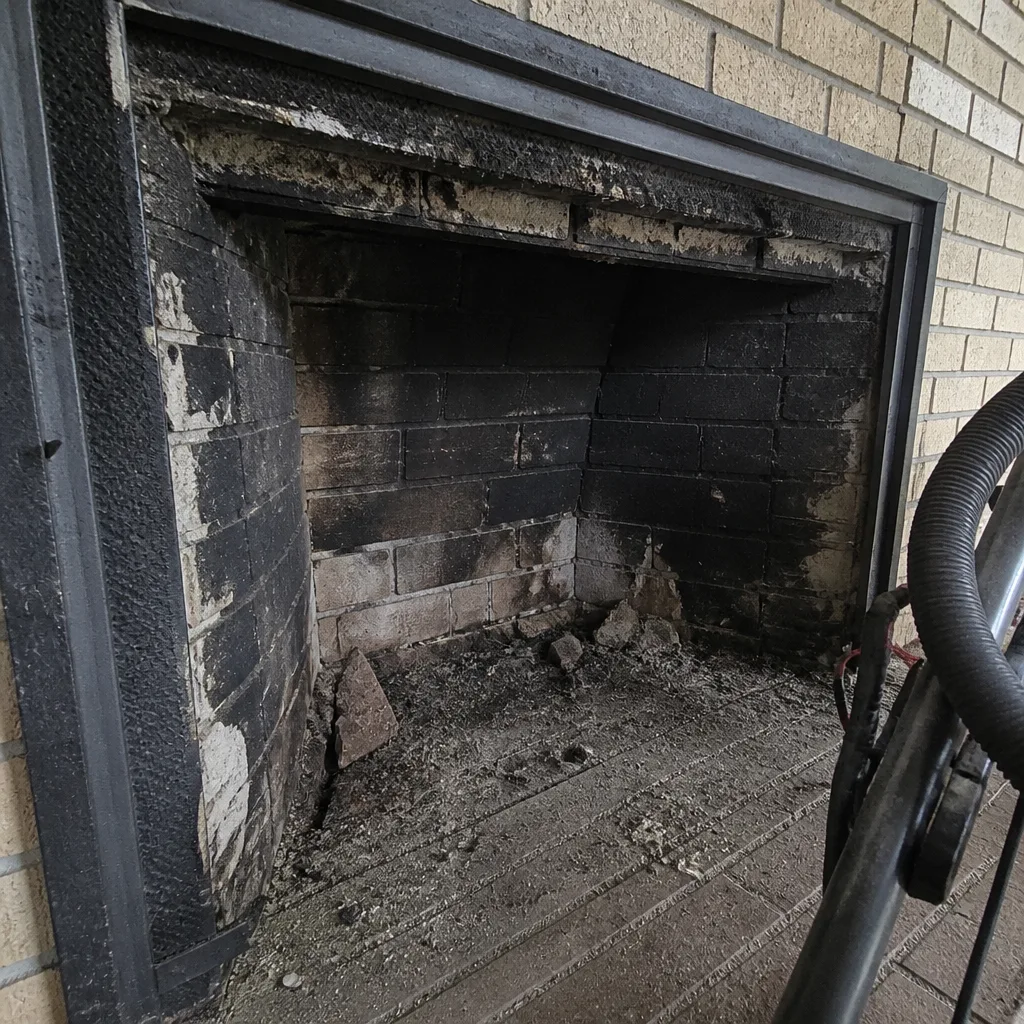 Before
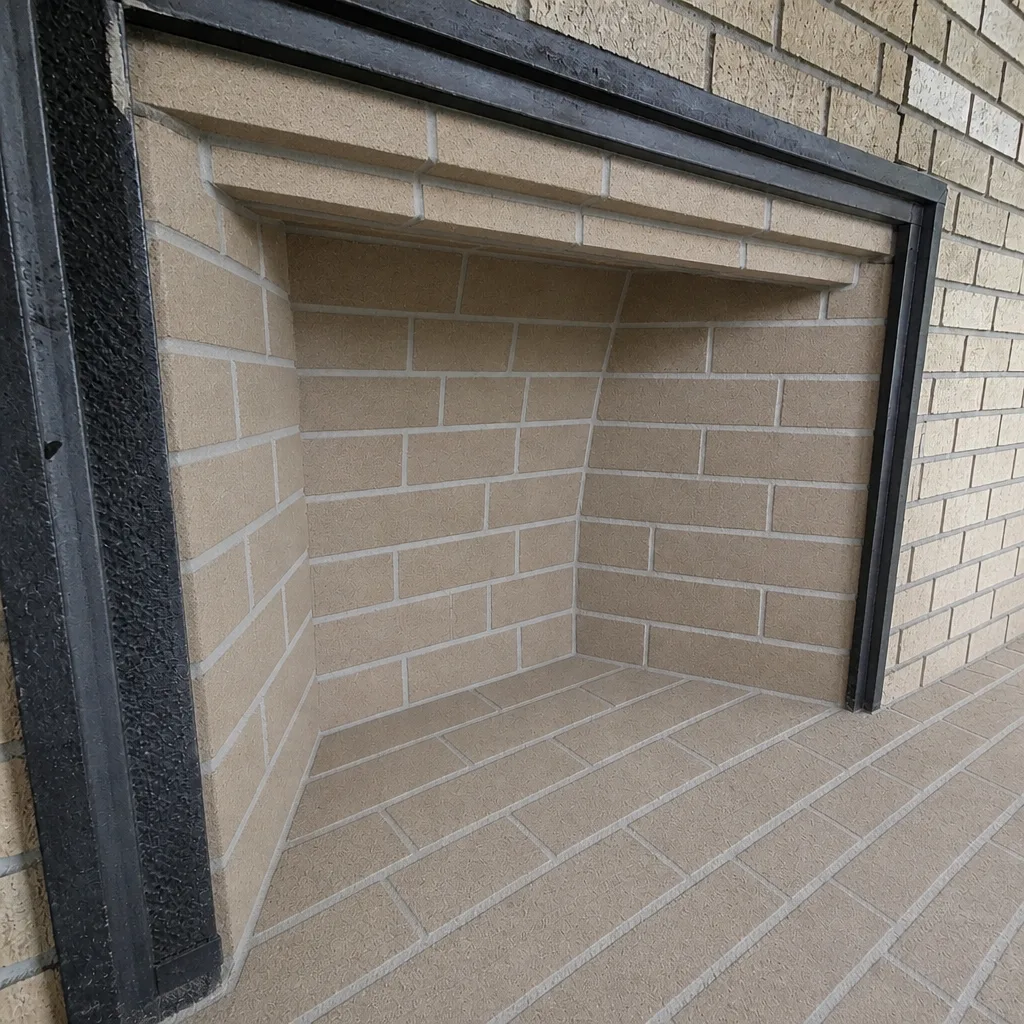 After
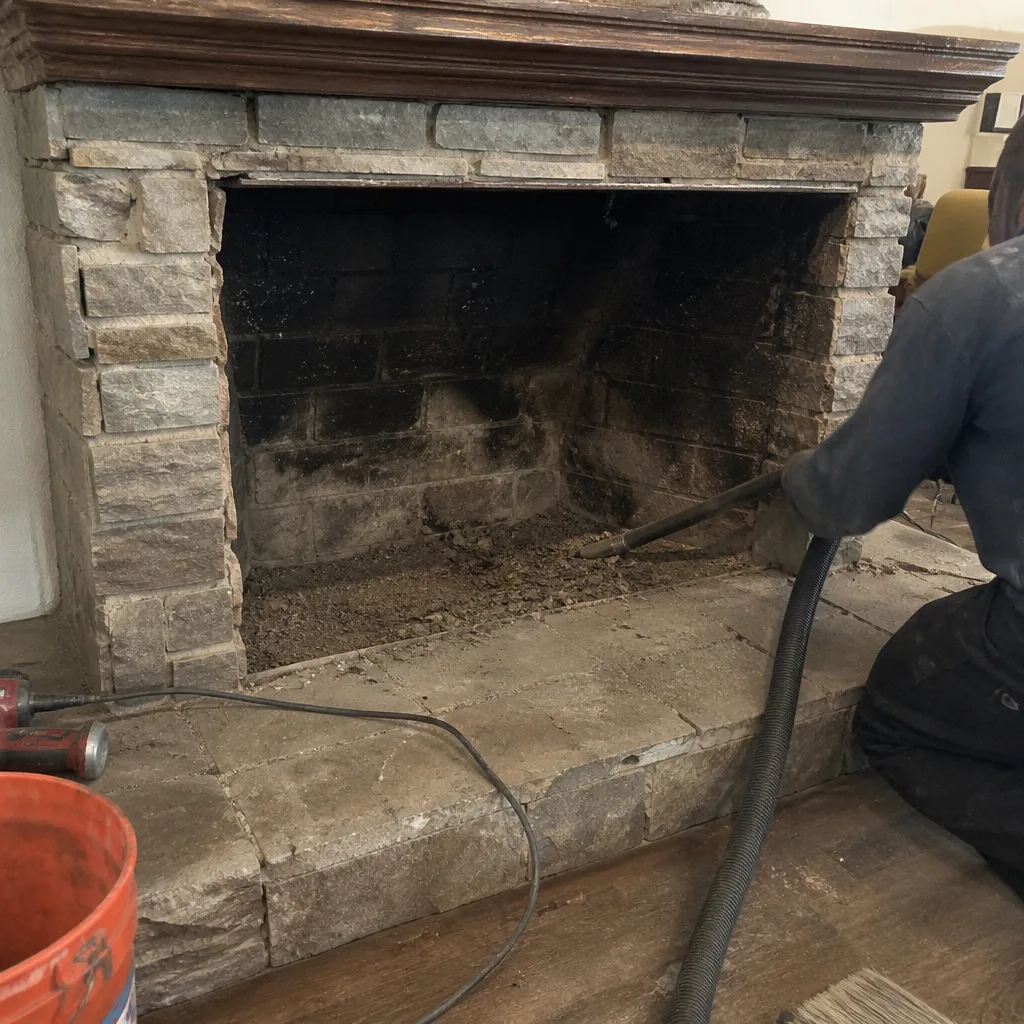 Before
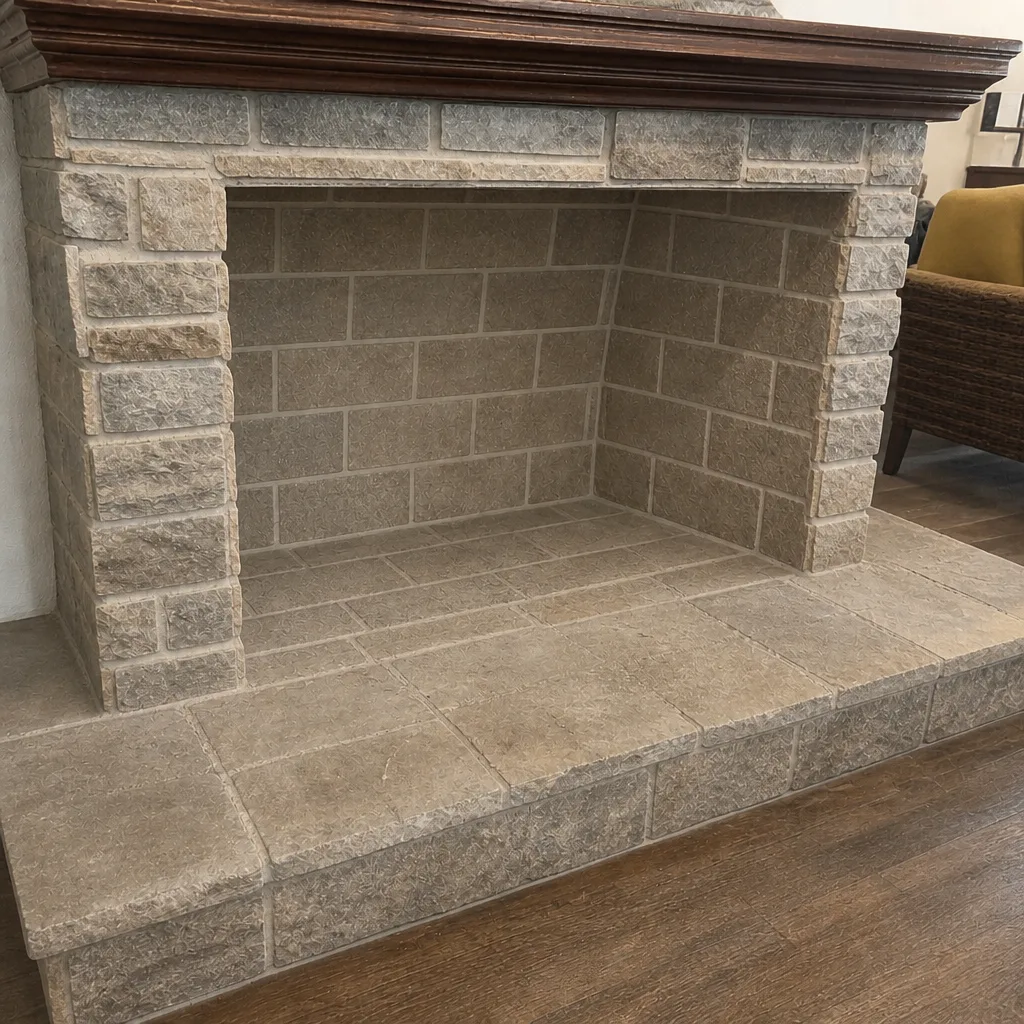 After